Analytical quality control with rules and control charts
Set up control types, frequency and rules per method. Check control charts and evaluate results according to the enabled rules and the criteria defined by the laboratory. The workflow can help identify deviations before release, depending on how the system is set up.
Illustrative system screen. Demo data that does not represent client results.
What you'll find in this area
Field and laboratory controls.
Method blank, field and trip blank, duplicate, spike, LCS and LCSD, matrix spike, surrogate, CRM, CCV, CCB, ICV and ICB, among others.
Configurable frequency.
Set whether the control runs every N samples, per batch, in the sequence, by time or by shift.
Westgard rules.
The system applies 6 rules when evaluating each run (1-2s as a warning, 1-3s, 2-2s, R-4s, 4-1s and 10x) and shows the 7T trend on the dashboard, with Levey-Jennings, CUSUM and EWMA charts. The action taken when a rule is violated is configured by the laboratory: warning, flagging the batch as blocked, logging a quality control nonconformity or reanalysis.
CUSUM and EWMA.
Charts that help spot small, persistent deviations that the Levey-Jennings chart may not show right away.
Configurable action on failure.
Flagging a batch as blocked signals the problem. The decision to release the result rests with the laboratory.
Reference materials.
Reference materials controlled by lot and expiry date, as registered.
Method history.
Points over time help assess whether the method is stable or trending.
Levey-Jennings, CUSUM and EWMA: what each chart is for
Each chart shows control behavior in a different way. Interpretation and action stay with the laboratory.
Levey-Jennings.
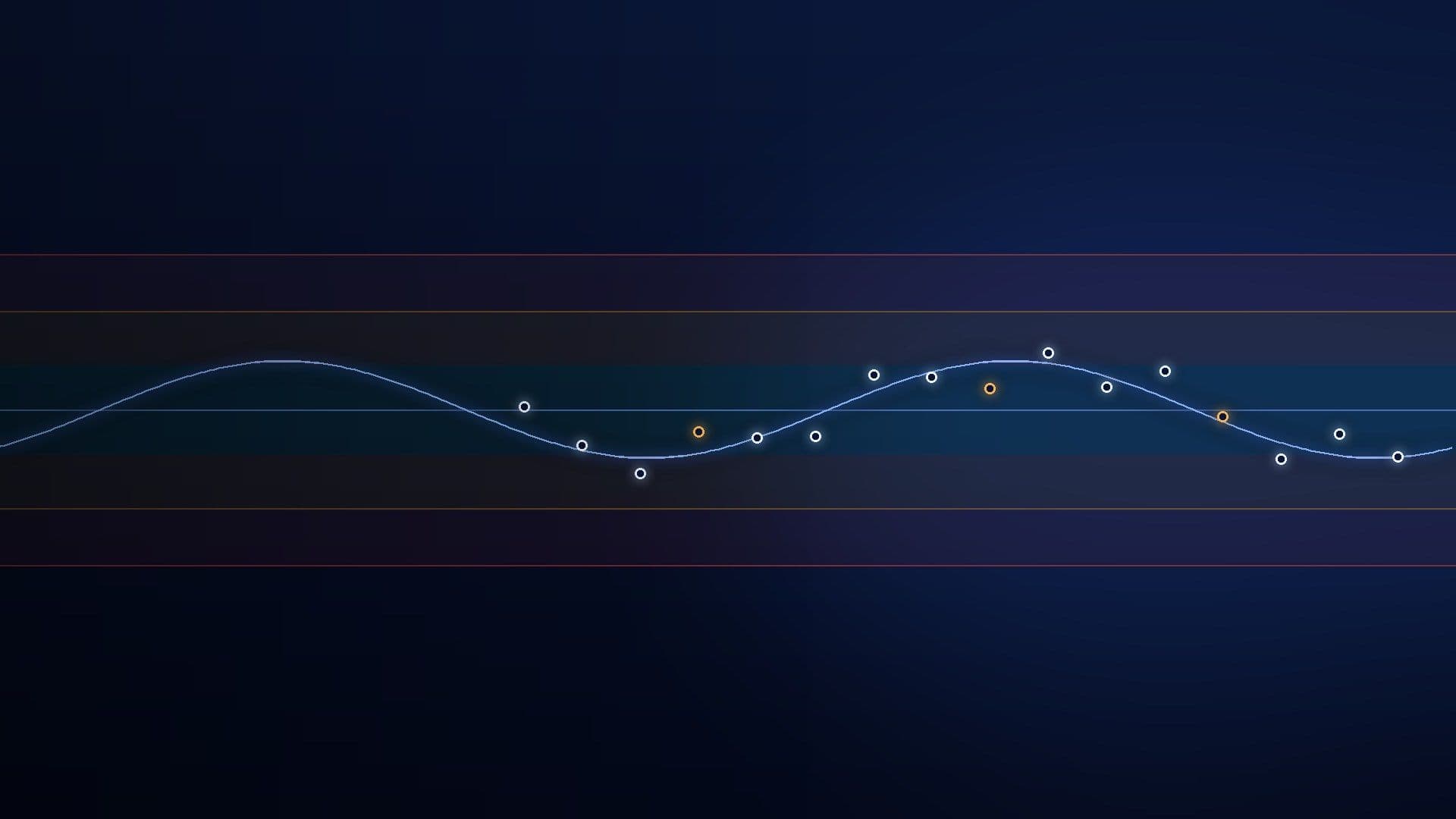
Shows each control result against the mean and the 1s, 2s and 3s zones, with the Westgard rules evaluated in the run.
CUSUM.
Accumulates small deviations in the same direction and helps reveal a persistent trend.
EWMA.
Gives more weight to recent results and smooths normal variation, which helps reveal method drift.
Frequently asked questions
Which Westgard rules does the system evaluate?
The system applies 6 rules when evaluating each run (1-2s as a warning, 1-3s, 2-2s, R-4s, 4-1s and 10x) and shows the 7T trend on the dashboard, with Levey-Jennings, CUSUM and EWMA charts. The action taken when a rule is violated is configured by the laboratory: warning, flagging the batch as blocked, logging a quality control nonconformity or reanalysis.
What is the practical difference between Levey-Jennings, CUSUM and EWMA?
Levey-Jennings, with the Westgard rules, shows larger one-off deviations. CUSUM and EWMA help spot small, persistent deviations. Interpretation and action stay with the laboratory.
Does the system prevent release when a control fails?
The action for each rule is configured by the laboratory: warning, flagging the batch as blocked, logging a quality control nonconformity or reanalysis. Flagging the batch signals the problem, and the decision to release the result rests with the laboratory.
Do I need to buy a separate quality control module?
Modules available according to the contracted scope. In the demo and in the proposal, we show what is included in your laboratory's scope.
Want to see the QMS with your laboratory's routine?
Free online demo, about 30 minutes long. Our team adapts the examples to your laboratory's routine.