
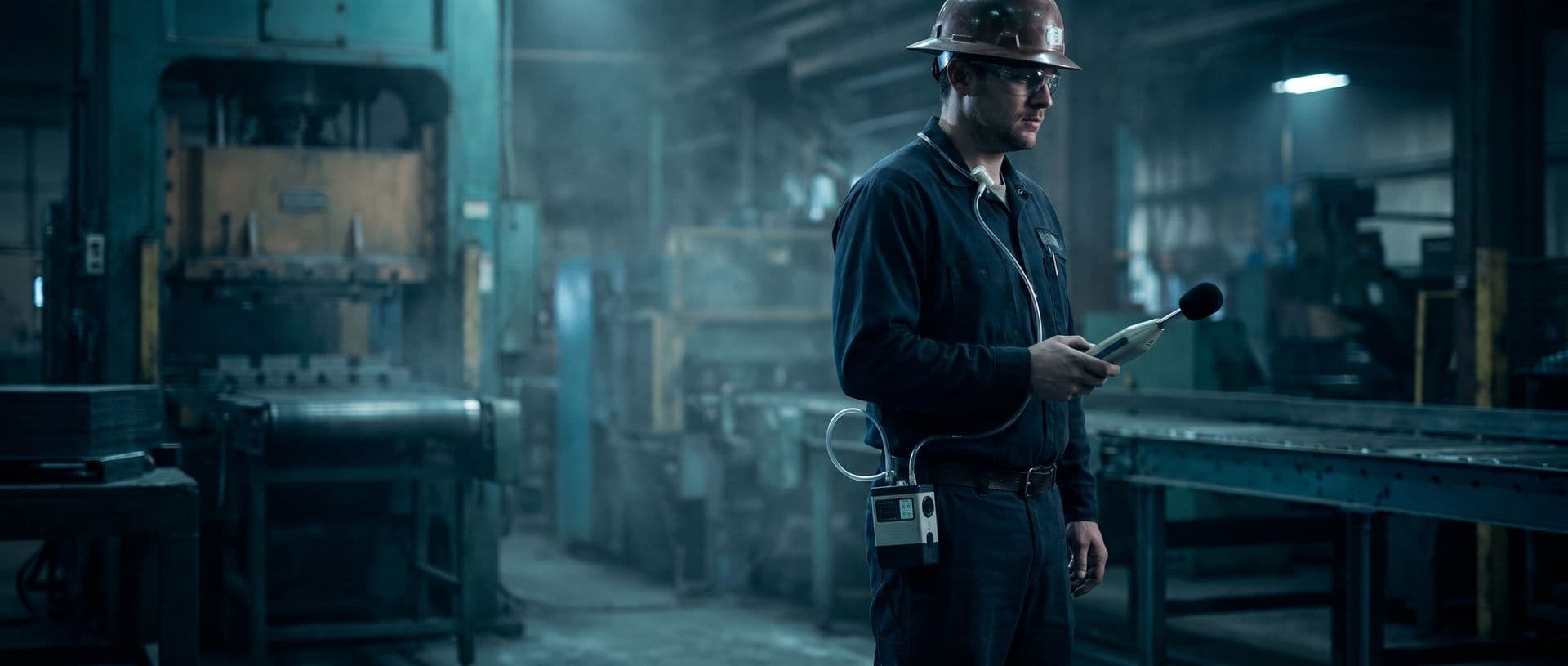
Occupational hygiene records, from the field to the technical report
Organize points, assessed agents, measurement conditions and technical records, with criteria registered according to the method and reference used by the lab.
For teams that run occupational hygiene assessments
Laboratories and teams that assess agents at the client's workstations, with field sampling, lab analyses and reports that support the qualified professional.
Campaigns with many workstations
Sampling plans with a calendar and frequency generate the work orders for reassessments. Each workstation comes in with its agent, and sample labels print in batches.
Samples linked to the workstation
Each filter or cassette gets a barcode or QR label and stays linked to the workstation and the agent assessed.
Analysis deadlines
Each parameter can have a deadline to start the analysis and a delivery deadline, counted from sampling or from inspection.
Records for the qualified professional
The system organizes the field and lab data that support the qualified professional's analysis. It does not issue an unhealthy-work (insalubridade) opinion or prepare the risk management program (PGR).
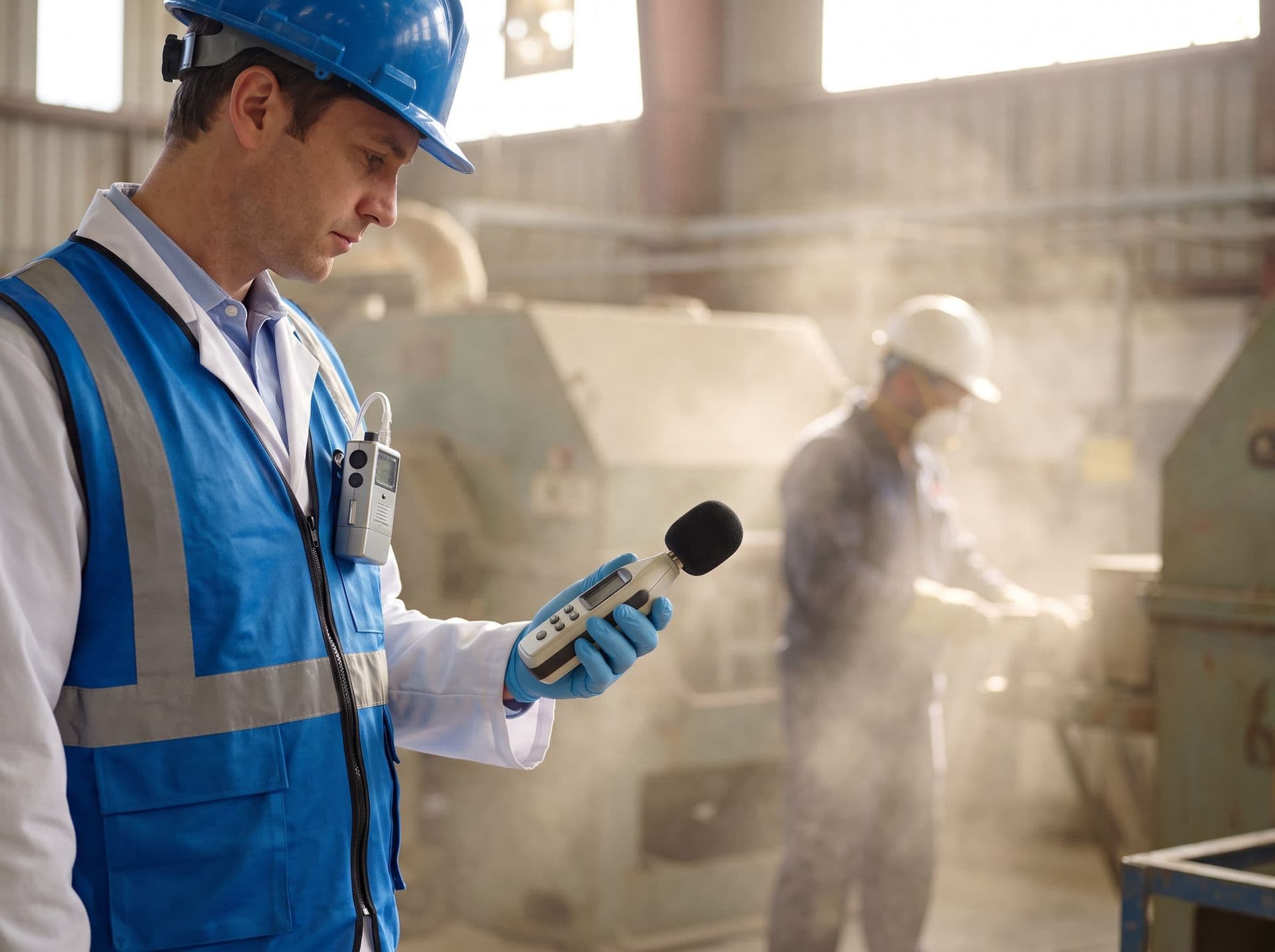
The record starts at the workstation
The technician records workstation, job role, agent and measurement conditions in the sampling app. Offline mode covers the operations confirmed in testing on the device, and data is sent when the connection is back.
- Workstation, job role and assessed agent on the same sheet
- Measurement conditions in configurable forms
- Photos and sampling time
Reference standards and the role of each one
Each standard covers a different agent or step. The lab registers the criterion used in each report, and the system compares the result with it.
Noise: NR-15 or NHO 01
NR-15 Annex 1 uses an exchange rate of q = 5 and 85 dB(A); NHO 01 uses q = 3 and 80 dB(A). They are different criteria. You register the criterion used in each report: NR-15 for unhealthy-work assessment or NHO 01 when the client asks for it.
Heat: NHO 06
NHO 06 is in its 3rd edition (2025), which cancels and replaces the earlier ones. NR-15 Annex 3 still refers to the 2nd edition (2017). Check which edition your case requires.
Dust: NHO 08 and NHO 03
NHO 08 covers sampling of solid particulate matter in workplace air; NHO 03 covers gravimetric analysis of the filter in the lab.
Gases and vapors
The NHOs cited here do not cover gases and vapors. The comparison uses NR-15 limits or another reference the lab adopts, such as ACGIH TLVs, when the client asks for it.
A test record is not an unhealthy-work opinion. The system organizes data that supports the analysis of the qualified professional, who concludes and signs the technical report. Technical decisions, such as acceptance criteria, decision rules, method validation and release of results, belong to the laboratory. The system records and organizes these decisions. Limits and their updates are maintained by the laboratory.
| Standard | Status | What it covers | Official source |
|---|---|---|---|
NR-15 - Atividades e operações insalubres Portaria MTb 3.214/1978 | In force | Unhealthy work activities and operations and tolerance limits for physical, chemical and biological agents.Text updated up to MTE Ordinance No. 2,021/2025. Annex 3 (heat) refers to NHO 06, 2nd edition (2017). | Official source |
Avaliação da exposição ocupacional ao ruído: procedimento técnico NHO 01/2001 | In force | Criteria and procedures to assess occupational exposure to continuous, intermittent and impact noise.It uses an exchange rate of q = 3 and an 80 dB(A) threshold level. NR-15 uses q = 5 and 85 dB(A). They are different criteria. | Official source |
Análise gravimétrica de aerodispersóides sólidos coletados sobre filtros de membrana: método de ensaio NHO 03/2001 | In force | Laboratory method to determine, by weighing, the mass of solid airborne particles collected on membrane filters. | Official source |
Avaliação da exposição ocupacional ao calor: procedimento técnico NHO 06/2025 | In force | Criteria and procedures to assess occupational heat exposure that may cause heat strain.The 3rd edition (2025) cancels and replaces the earlier ones. NR-15 Annex 3 still cites the 2nd edition (2017). Check which edition your case requires. | Official source |
Coleta de material particulado sólido suspenso no ar de ambientes de trabalho: procedimento técnico NHO 08/2009 | In force | Procedure to sample solid particulate matter suspended in workplace air. | Official source |
References checked on 26/10/2026. Limits and their updates are maintained by the laboratory.
Illustrative system screen. Demo data that does not represent client results.
Agent and location record
Workstation, job role, agent, sampling method and analysis method are kept in the same record. The result comes from the lab or the instrument and is compared with the registered criterion. Exposure calculations follow the method and the spreadsheet validated by the lab.
See this flow in the demoHow the system supports occupational hygiene
From the workstation to the technical report, with each criterion stated in the record.
Comparison with criteria registered and validated by the team
When results are entered, each one is compared with the criterion registered for that agent, and anything outside is flagged for review.
Dosimeter, balance and spreadsheet results by file
Instrument results come in by file (CSV, TXT, XLS, XLSX, ASTM, HL7, XML, JSON or fixed-width text), through a local agent that watches a folder, by manual upload or by webhook. Each instrument is configured and tested with the laboratory.
Measurement conditions on record
Configurable forms for workstation conditions, job role assessed, sampling time and field notes, with a history of what was filled in.
Technical report in the lab's template
Configurable templates, technical review before issue and revisions archived with reason and person responsible. The report supports the PGR and LTCAT prepared by the qualified professional.
Equipment and calibration
Calibration of pumps and balances with expiry warnings. The default is to warn; blocking applies to equipment flagged as critical or when the lab turns on blocking mode.
Change history
Who changed what and when in results and in the main records, to rebuild the history of an assessment.
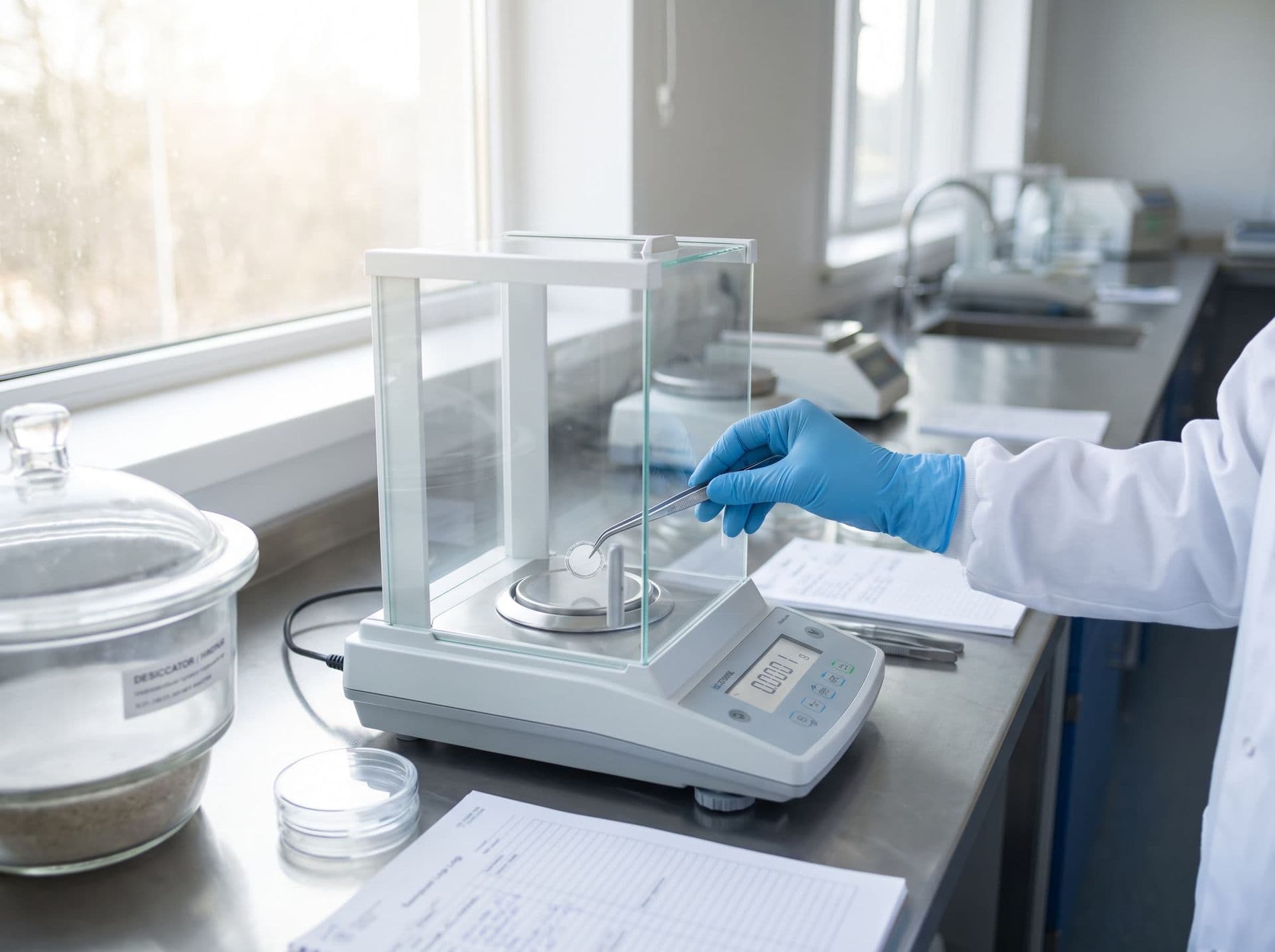
From filter weighing to the reviewed report
In the lab, the filter is weighed according to the method, and the result is compared with the criterion the lab registered. The qualified professional analyzes the data and signs the technical report.
- Result compared with the criterion registered by the team
- Technical review recorded before issue
- Data that supports the PGR and LTCAT, without replacing the qualified professional
Features mentioned on this page
Each feature is shown with its current status and with what remains the lab's responsibility.
| Topic | Status | What exists today | Limit / laboratory responsibility |
|---|---|---|---|
| Regulations and limits | Depends on configuration | The laboratory registers regulations, matrices and maximum allowed values, and the system compares each result with the limits registered for the service. | Regulations are not preloaded. Registering, checking and updating limits are the laboratory's responsibility. |
| Sampling app with offline mode | Available | The app downloads sampling jobs, including PDFs, for work without internet. It records photos, the client's signature, GPS and checklist, and sends them in batches, with retries, when the connection returns. | Offline mode covers the operations confirmed in on-device testing. Validate your sampling flow in airplane mode during implementation. |
| Sampling | Partial | Sampling schedules with calendar and frequency that create work orders automatically, plus field sampling records in the app. | There is no statistical sampling plan, such as ISO 2859 or AQL. The sampling method and plan are defined by the laboratory. |
| Instrument result import | Via file import | Imports results from CSV, TXT, XLS and XLSX files and from ASTM E1394, HL7 v2, XML, JSON and fixed-width text formats. Files arrive through an agent installed at the laboratory that watches a folder, by manual upload or by webhook. | The system does not connect to the serial port or directly to the instrument. The ready-made import profiles are generic, with no reader specific to a manufacturer or model, and each instrument is configured and tested with the laboratory. |
| Equipment and calibration | Depends on configuration | Equipment register with life cycle, calibration with certificate and uncertainty, maintenance and expiry alerts. Using expired or failed equipment triggers an alert or a block, depending on the setup. | The default is to warn. Blocking applies to equipment flagged as critical or when the laboratory turns on blocking mode. |
| Reporting of results | Available | Reports in configurable templates, with comparison against registered limits, marking of accredited tests, partial reports and revisions archived with reason and owner. | Report content, the decision rule and statements of conformity are defined and checked by the laboratory. The uncertainty shown on the report is the value entered, since the system does not calculate it. |
Current features and limits
Regulations and limits
- What exists today
- The laboratory registers regulations, matrices and maximum allowed values, and the system compares each result with the limits registered for the service.
- Limit / laboratory responsibility
- Regulations are not preloaded. Registering, checking and updating limits are the laboratory's responsibility.
Sampling app with offline mode
- What exists today
- The app downloads sampling jobs, including PDFs, for work without internet. It records photos, the client's signature, GPS and checklist, and sends them in batches, with retries, when the connection returns.
- Limit / laboratory responsibility
- Offline mode covers the operations confirmed in on-device testing. Validate your sampling flow in airplane mode during implementation.
Sampling
- What exists today
- Sampling schedules with calendar and frequency that create work orders automatically, plus field sampling records in the app.
- Limit / laboratory responsibility
- There is no statistical sampling plan, such as ISO 2859 or AQL. The sampling method and plan are defined by the laboratory.
Instrument result import
- What exists today
- Imports results from CSV, TXT, XLS and XLSX files and from ASTM E1394, HL7 v2, XML, JSON and fixed-width text formats. Files arrive through an agent installed at the laboratory that watches a folder, by manual upload or by webhook.
- Limit / laboratory responsibility
- The system does not connect to the serial port or directly to the instrument. The ready-made import profiles are generic, with no reader specific to a manufacturer or model, and each instrument is configured and tested with the laboratory.
Equipment and calibration
- What exists today
- Equipment register with life cycle, calibration with certificate and uncertainty, maintenance and expiry alerts. Using expired or failed equipment triggers an alert or a block, depending on the setup.
- Limit / laboratory responsibility
- The default is to warn. Blocking applies to equipment flagged as critical or when the laboratory turns on blocking mode.
Reporting of results
- What exists today
- Reports in configurable templates, with comparison against registered limits, marking of accredited tests, partial reports and revisions archived with reason and owner.
- Limit / laboratory responsibility
- Report content, the decision rule and statements of conformity are defined and checked by the laboratory. The uncertainty shown on the report is the value entered, since the system does not calculate it.
Frequently asked questions
Does the system ship with NR-15 and the NHOs registered?
No. The lab registers the agents, criteria and limits it uses and keeps them up to date. During implementation, our team helps build these records.
Does the system issue the unhealthy-work (insalubridade) report?
No. The system organizes field and lab data and compares each result with the registered criteria. The unhealthy-work opinion, the PGR and the LTCAT are prepared and signed by the qualified professional.
Does the system pick the right standard for each agent?
No. The lab defines the criterion for each report, for example NR-15 or NHO 01 for noise, and the system compares the result with the criterion registered and validated by the team.
Can I assess several agents at the same workstation?
Yes. Each agent keeps its own registered criterion, and each result is compared with the criterion for its agent.
Does field assessment work without internet?
The app downloads the sampling jobs for offline work and sends the data when the connection is back. Offline mode covers the operations confirmed in testing on the device. Validate your sampling workflow in airplane mode during implementation.
Does it import dosimeter and balance results?
Instrument results come in by file (CSV, TXT, XLS, XLSX, ASTM, HL7, XML, JSON or fixed-width text), through a local agent that watches a folder, by manual upload or by webhook. Each instrument is configured and tested with the laboratory. Continuous serial capture is not available in the current version.
Related pages
- LIMS for samples, analyses, review and reportsHow the lab organizes each sample from intake to report.
- Quality management for laboratoriesQuality control, documents, nonconformities and risks.
- Integrations with instruments and systemsResult import by file, API, webhooks and ERP.
- Air quality and emissionsMonitoring of emissions, ambient air and indoor air.
See occupational hygiene records with your lab's criteria
Free online demo, about 30 minutes long. Our team adapts the examples to your laboratory's routine.