Every batch traced, from sampling to a signed report
A LIMS built for labs running food microbiology and physicochemical testing. Tie each sample to its batch, run analyses by method, evaluate results against regulation and release the report on time. One system, ISO/IEC 17025 ready.
What food testing labs are up against
Food labs live on tight deadlines and samples that will not wait. Microbiology has an incubation window, the client wants the report, and the auditor is at the door asking where every result came from. Run that on spreadsheets and any recall turns into a treasure hunt.
Answer the recall on the spot, without digging.
Today, when a client asks which batch a result came from, you spend hours cross-checking spreadsheets against bench notes. That lost time goes away.
No microbiology report misses its deadline.
Incubation, plate counts and delivery each on their own clock. You stop losing the report's due date because you lost track of time.
Serve many clients without the chaos.
Dairy plants, meat processors, process water, each with its own recurring sampling and its own way of receiving results, all in one place.
Walk into the audit with every data point proven.
FSSC 22000 and ISO 17025 want data that is attributable, dated and tamper-proof. Spreadsheets prove none of that, the system does.
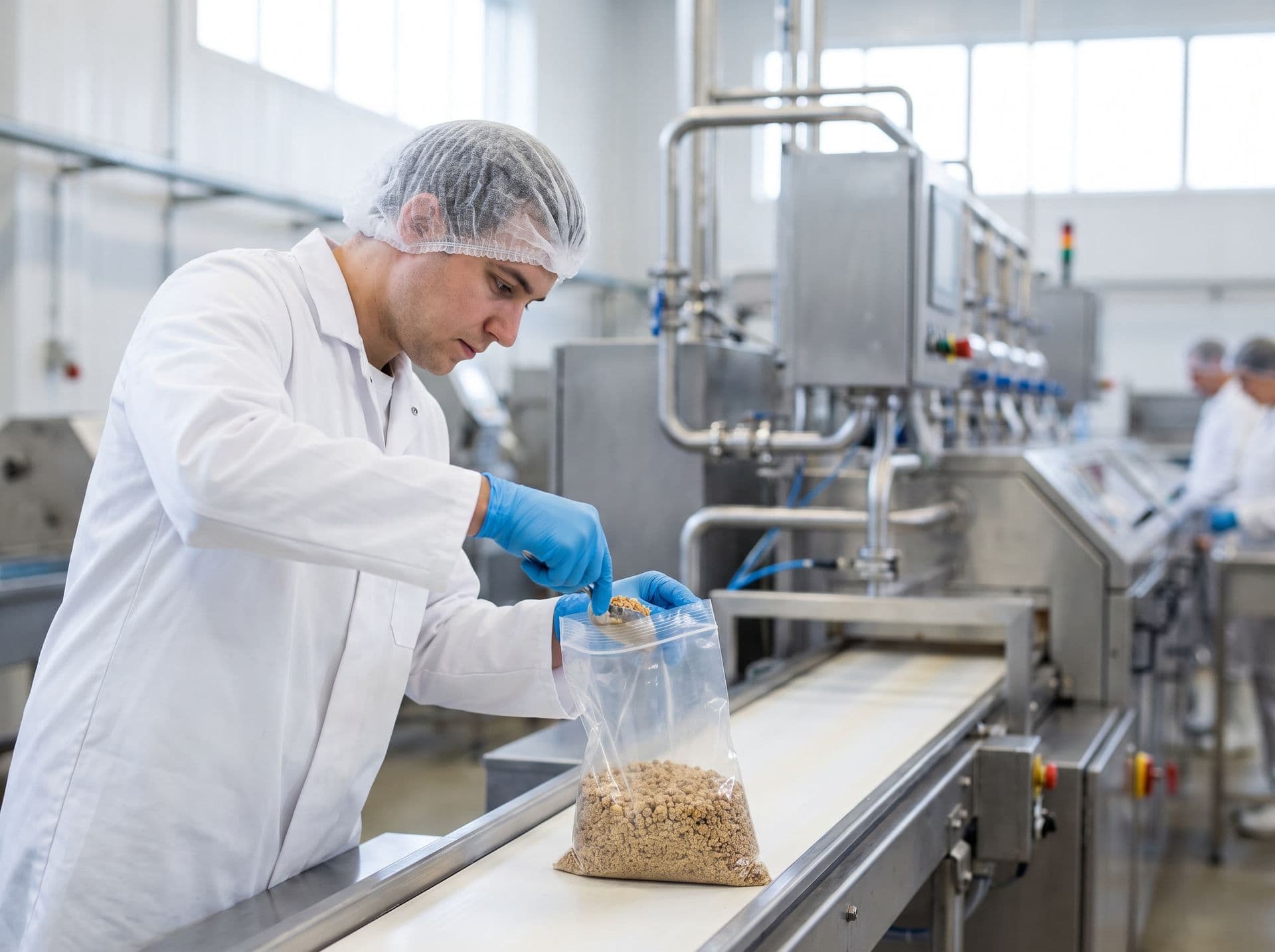
Every sample enters tied to the right batch
In the plant or in the field, the sampler IDs the sample by work order, matrix and parameter and prints the barcode or QR label. The app works offline on the plant floor, so sampling happens even with no signal and nothing gets mixed up along the way.
- Label by work order, sample, matrix and parameter
- Offline sampling app on the plant floor
- Sample traced from intake to disposal
End-to-end batch traceability
No more samples lost along the way. Each sample enters with an ID, gets a label and carries the full record of who did what and when, from sampling to disposal. When the recall question comes, the answer is one click away.
The right result goes to the right sample, always.
Every container enters labeled by work order, sample, matrix and parameter, with a barcode or QR. From the bench to the archive, nothing gets mixed up.
The sample's whole story is on record.
Receipt, photos, splitting, analysis, review and disposal with a reason, all dated. It is the audit trail the assessor asks for.
Merge collections into one record without losing origin.
The composite sample combines several collections into a single record, with a billing rule, and still keeps the trace of each origin.
The past is never erased (ALCOA+ principles).
Records that are attributable, legible, contemporaneous, original and accurate. Every change is logged, the way data integrity demands.
Microbiology and physicochemistry under control
The analyst fills only what matters and the system handles the rest. You build the service specification per matrix, run the analysis with a worksheet guiding the work, and the result only becomes a report after it passes review.
Every assay your lab's way.
Coliform counts, Salmonella, aerobic mesophiles, molds and yeasts, pH, acidity, moisture. Each parameter with its own method and unit, the way you work.
Know on the spot if the result passes or fails.
Register legal limits (ANVISA RDC rules, national food standards) once and the system compares each result against the reference, flagging anything out of spec. No table built by hand.
A typo never reaches the client.
Mandatory technical check before the report goes out. The result only moves on after someone else reviews it.
Bring the instrument reading in without retyping.
Import results from instruments and spreadsheets into the system, without typing reading by reading or slipping a decimal.
Analytical quality control that holds up in an audit
QC stops being a spreadsheet built by hand and the audit stops being a scavenger hunt. Equipment without current calibration is blocked, reference material has controlled stock, and the rules follow what ISO/IEC 17025 expects.
No expired equipment enters the run.
An expiry traffic light warns you before calibration is due, and failed or out-of-calibration equipment is blocked from use.
Log the control and the run comes back evaluated.
QC rules follow ISO/IEC 17025, with evaluation of the assays themselves and control samples. It is the way the auditor expects to see it.
Reference material under validity control.
Certified reference materials (CRM) with controlled stock, tied to quality control.
No deviation left loose.
A non-conformity comes in, gets treated and is tracked until closed.
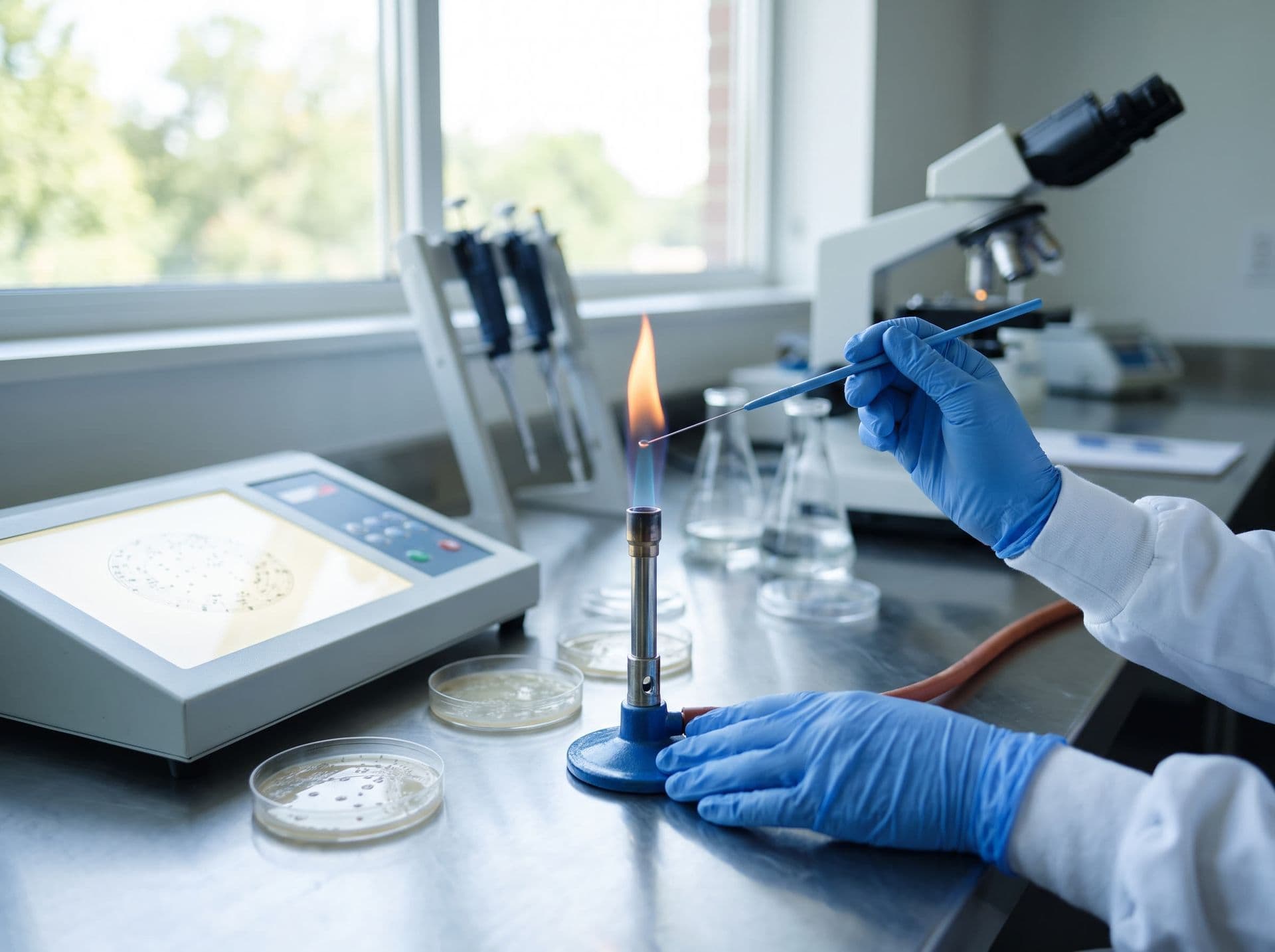
The result checked against regulation and signed
In microbiology and physicochemistry, each parameter is compared against the legal limits your lab registers (ANVISA RDC, national food standards). Anything out shows up on the spot and the report only goes out after the technical check, signed by the technical manager.
- Result compared against the legal limit you register
- Mandatory technical check before the report
- Report signed by the technical manager, with version control
Reports on time and a client portal
The report comes out ready, in your layout, and the client follows along without access to your system. Configure the template once, with header, footer and variables that fill themselves in, sign it and generate the PDF.
Your template, your logo, filled in for you.
Header, footer, logo and signature your lab's way, with variables filled automatically. You design it once and use it every time.
Signed and versioned document.
Every report comes out signed and under version control, keeping the traceability of the template used.
The client follows along through the portal.
Clients view proposals through a secure link, on an address that looks like your lab, with no login to your internal system.
Recurring sampling that organizes itself.
Periodic process-water and surface-swab campaigns, with planned routes and an app that works offline on the plant floor.
What a food lab actually uses
You do not pay an add-on for every function. The full cycle already ships with the system, from sample intake to invoicing.
Samples and Labels.
Receipt, splitting, barcode/QR and tracing.
Laboratory and Analyses.
Methods, parameters, execution and result review.
Quality Control and Equipment.
Analytical QC, calibration, maintenance and CRM.
Reports and Templates.
Template, signature and PDF.
Sampling and Logistics.
Routes, scheduling and an offline field app.
Native finance.
Invoicing, electronic invoice (NF-e), accounts receivable and P&L, without leaving the system.
Frequently asked questions
Does Gerencialab connect directly to microbiology instruments?
The system imports results from instruments and spreadsheets. You bring the reading in without retyping, with no need for real-time serial integration.
Can I trace a sample by production batch?
Yes. Each sample enters with an ID, gets a barcode or QR label and carries the full end-to-end history, from sampling to disposal.
Does it help with ISO/IEC 17025 and FSSC 22000 audits?
The system supports ISO/IEC 17025 requirements (accredited scopes, QC, calibration, traceability) and follows ALCOA+ data integrity principles, which underpin the documentation required in food safety schemes.
How does evaluation against ANVISA RDC rules work?
You register the legal limits as references and the system compares each result against the standard, flagging anything out of spec.
Does field sampling work without internet?
Yes. The sampling app records data and photos offline and syncs when the signal is back. Useful for process-water and surface sampling inside the plant.
Do I need anything extra to issue invoices?
No. Finance with invoicing and electronic invoice (NF-e) is already part of the system.
See batch traceability running with your own lab's data
See a free demo and watch the batch traced end to end: labeled sample, analysis run, result evaluated against regulation and a signed report. No empty promises, you see it working on screen.