
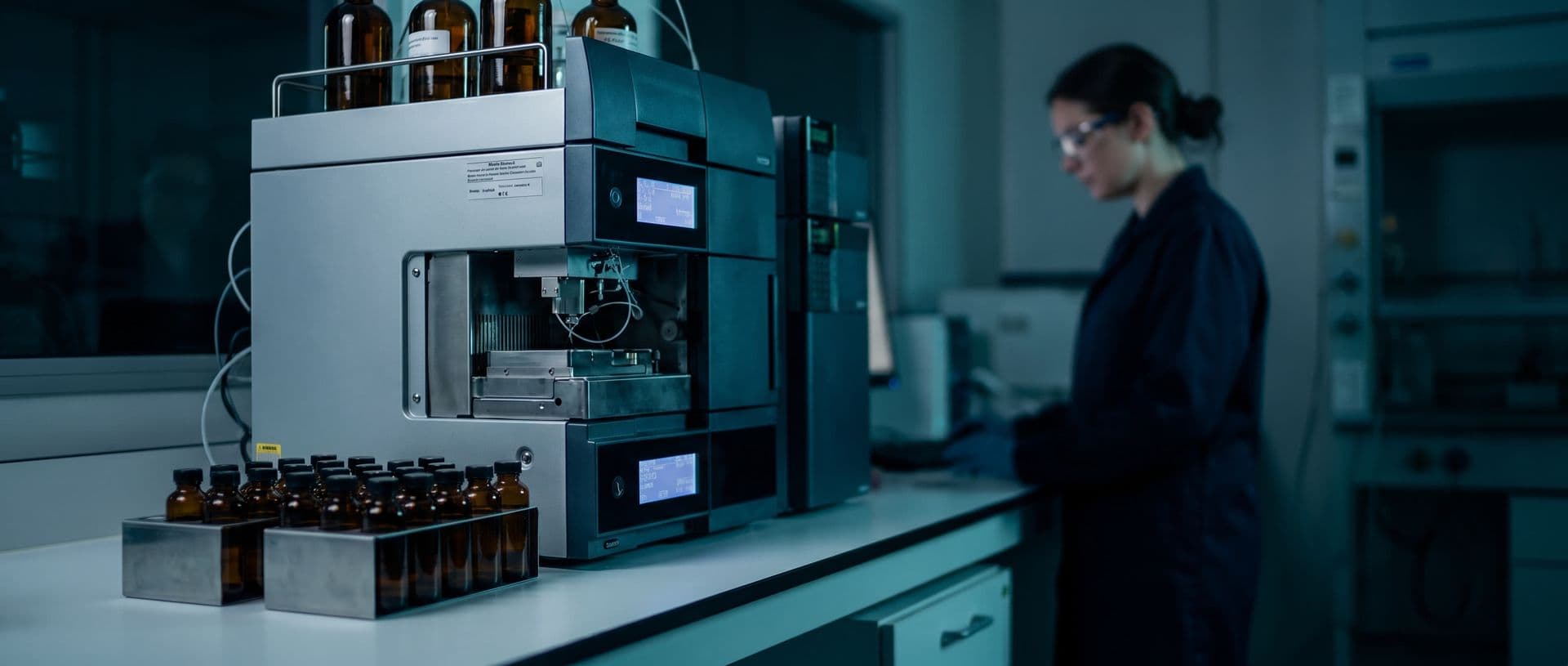
Organize the laboratory's quality control analyses and records
Connect methods, analyses, reference materials, controls and technical review in a traceable flow, with fit to be checked against the regulatory requirements of your scenario.
Important: Gerencialab does not currently offer a GMP validation package or proven compliance with 21 CFR Part 11.
The features on this page support the routine of laboratories that work with ISO/IEC 17025. If your scenario requires computerized system validation, talk to our team before signing up to check whether it fits.
Day-to-day bench QC and where it gets stuck
QC analysts live with rework: the same result typed into the notebook, the spreadsheet and the report. Each copy is a chance for error and a hard question at the audit.
Time spent proving where data came from.
The same result sits in the bench notebook, the QC spreadsheet and the report. When the auditor asks for the origin, the search starts in three places.
Control charts built by hand.
Built in Excel, with an acceptance rule only one person knows how to apply. If that person is out, QC falls behind.
Expired calibration found late.
The problem shows up at review, with the batch already released, and the test has to be redone.
Audits that become projects.
Evidence of calibration, QC, metrological traceability and method version gathered by hand, across folders and spreadsheets.
Reference material tracked from memory.
Reference material expiry and the lot used in each test are scattered, and the auditor asks.
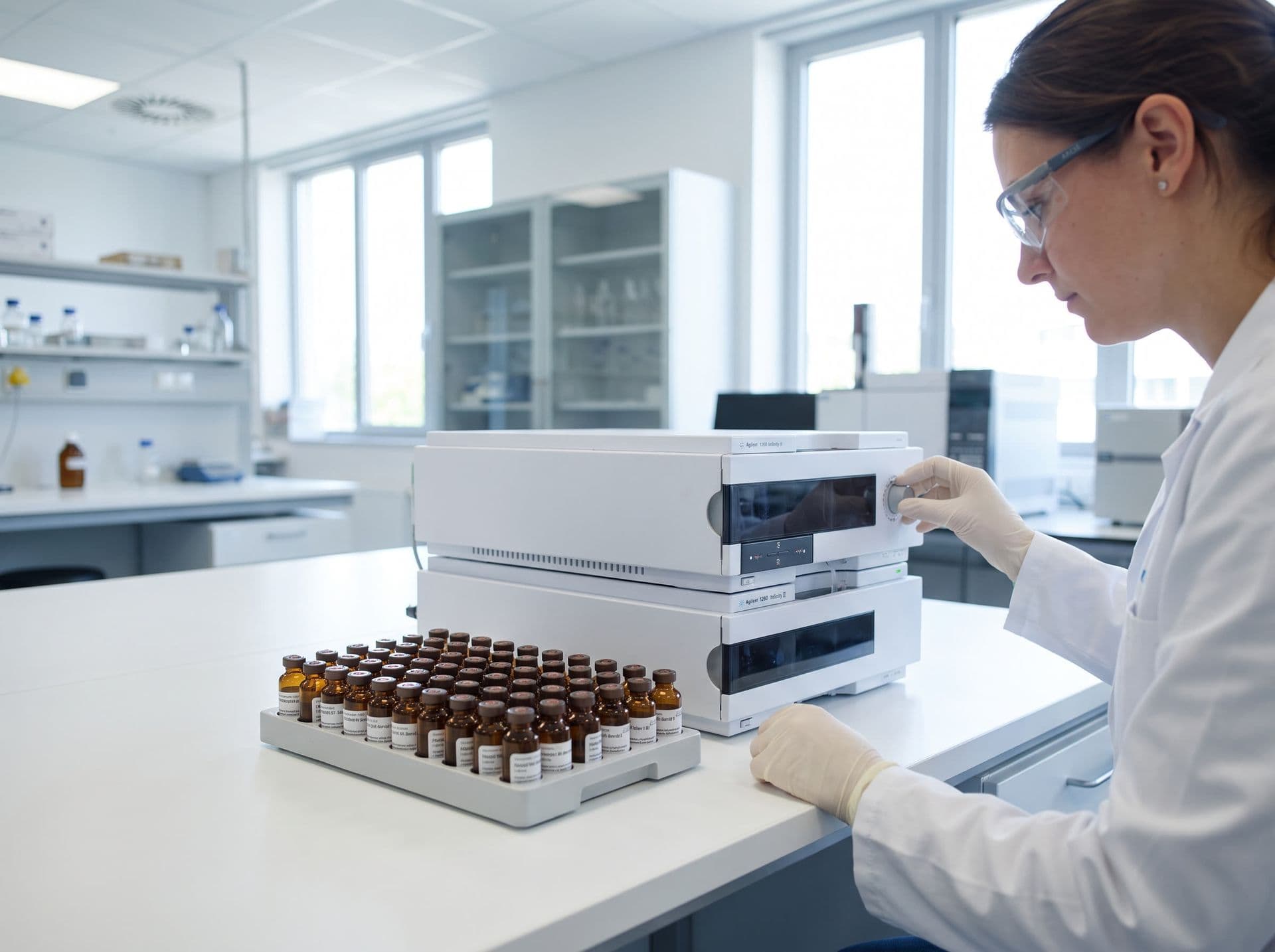
Control chart updated when the control is entered
The analyst enters the control and the system applies the Westgard rules when evaluating the run, with reference materials controlled by lot and expiry. The action when a rule is violated is configured by the laboratory.
- Westgard rules applied when evaluating each run
- Reference material controlled by lot and expiry
- Less retyping of data into spreadsheets
How Gerencialab supports QC
The result is entered once and moves through the flow, from the sample on the bench to the signed report, with fewer copies between spreadsheets and documents.
Data origin checked on screen.
Each result keeps author, date and the values before and after each change, linked to the sample and the report.
Statistical control in run evaluation.
The system applies 6 rules when evaluating each run (1-2s as a warning, 1-3s, 2-2s, R-4s, 4-1s and 10x) and shows the 7T trend on the dashboard, with Levey-Jennings, CUSUM and EWMA charts. The action taken when a rule is violated is configured by the laboratory: warning, flagging the batch as blocked, logging a quality control nonconformity or reanalysis.
Reference materials by lot and expiry.
Reference materials recorded by lot and expiry, as registered by the laboratory, and linked to the controls.
Expired equipment triggers a warning or a block.
Calibration with certificate and expiry notice. The default is to warn; blocking applies to equipment flagged as critical or when the laboratory turns on block mode.
Standardized, signed report.
Configurable template, variables filled in by the system and a signed PDF. Method and template versions stay under control.
Chromatography and other instruments by file.
The file exported by the instrument software comes in through a local agent that watches a folder, by manual upload or by webhook. Each instrument is configured and tested with the laboratory. Continuous serial capture is not available in the current version.
Records organized to support assessments and audits
In a regulated area, it pays to be direct about what the system delivers and what is outside it.
Features for ISO/IEC 17025 routines.
Accredited tests flagged on the report, quality control, equipment, calibration, metrological traceability and controlled documents in one system. ISO/IEC 17025 accreditation is granted to the laboratory for the applicable scope, not to the software.
Audit trail.
Records who did what and when in changes to the main records and results and in system access, kept for at least 5 years. The trail covers the monitored records, not all data in the system.
ICP-Brasil digital signature.
ICP-Brasil digital signature on reports with an A1 certificate. A3 certificates and timestamping are not available in the current version.
What is outside the current scope.
Computerized system validation for GMP or the FDA is not part of the current offering. If your requirements include that validation, talk to our team first to align expectations.
Limits and their updates are maintained by the laboratory.
Technical decisions, such as acceptance criteria, decision rules, method validation and release of results, belong to the laboratory. The system records and organizes these decisions.

Records organized for the ISO/IEC 17025 audit
Each result keeps author, date and change history, linked to the sample and the report. The report can be signed with an ICP-Brasil A1 certificate, and the technical manager is responsible for its content.
- History of each result with author and date
- ICP-Brasil signature with an A1 certificate
- Calibration and QC evidence in one system
Modules most used in pharma and cosmetic QC
Modules available according to the contracted scope. These are the ones QC uses most day to day.
Laboratory and analyses.
Methods, parameters, service specifications, execution and results review before signature and release.
Analytical QC.
Westgard rules, control charts, reference materials and tracking of control samples.
Equipment and calibration.
Equipment life cycle, calibration with expiry notice, maintenance and nonconformities.
Reports and templates.
Configurable templates, standardized header and footer, signature and version control.
Samples.
Intake with barcode or QR, photos of the sample's condition, disposal with a recorded reason and a history of each step.
Supplies and controlled substances.
Consumables and controlled substances, with the control bodies linked to each supply and a report for checking.
What exists today and where the limits are
Status of each feature mentioned on this page, for the current version of the system.
| Topic | Status | What exists today | Limit / laboratory responsibility |
|---|---|---|---|
| Westgard rules and control charts | Available | Evaluates each run with 6 Westgard rules (1-2s as a warning, 1-3s, 2-2s, R-4s, 4-1s and 10x), shows the 7T trend on the dashboard and plots Levey-Jennings, CUSUM and EWMA charts. The action taken when a rule is violated is configured by the laboratory. | Rules such as 2 of 3 2s, 3-1s, 8x, 9x and 12x are not part of the current version. Flagging a batch as blocked signals the problem, and the decision to release the result rests with the laboratory. |
| Metrological traceability | Available | Calibration certificates recorded with uncertainty and k factor, and reference materials controlled by lot and expiry date, as registered. | The metrological traceability chain and the competence of calibration providers are documented and evaluated by the laboratory. |
| Audit trail | Available | Records who did what and when for changes to the main records and results, plus system logins. The application only appends entries to the trail, without editing earlier ones, and the minimum retention is 5 years. | The trail covers the monitored records and logins, not all system data. Entries older than 5 years can be purged according to the setup, and protection also depends on database access control. |
| ICP-Brasil digital signature | Depends on configuration | Signs the PDF report with an ICP-Brasil A1 digital certificate stored on the server, with a validation code the client can check. | Without a registered A1 certificate, the report carries an electronic signature stamp. A3 certificates, timestamping and long-term PAdES signatures are not available. |
| Instrument result import | Via file import | Imports results from CSV, TXT, XLS and XLSX files and from ASTM E1394, HL7 v2, XML, JSON and fixed-width text formats. Files arrive through an agent installed at the laboratory that watches a folder, by manual upload or by webhook. | The system does not connect to the serial port or directly to the instrument. The ready-made import profiles are generic, with no reader specific to a manufacturer or model, and each instrument is configured and tested with the laboratory. |
| Equipment and calibration | Depends on configuration | Equipment register with life cycle, calibration with certificate and uncertainty, maintenance and expiry alerts. Using expired or failed equipment triggers an alert or a block, depending on the setup. | The default is to warn. Blocking applies to equipment flagged as critical or when the laboratory turns on blocking mode. |
Current features and limits
Westgard rules and control charts
- What exists today
- Evaluates each run with 6 Westgard rules (1-2s as a warning, 1-3s, 2-2s, R-4s, 4-1s and 10x), shows the 7T trend on the dashboard and plots Levey-Jennings, CUSUM and EWMA charts. The action taken when a rule is violated is configured by the laboratory.
- Limit / laboratory responsibility
- Rules such as 2 of 3 2s, 3-1s, 8x, 9x and 12x are not part of the current version. Flagging a batch as blocked signals the problem, and the decision to release the result rests with the laboratory.
Metrological traceability
- What exists today
- Calibration certificates recorded with uncertainty and k factor, and reference materials controlled by lot and expiry date, as registered.
- Limit / laboratory responsibility
- The metrological traceability chain and the competence of calibration providers are documented and evaluated by the laboratory.
Audit trail
- What exists today
- Records who did what and when for changes to the main records and results, plus system logins. The application only appends entries to the trail, without editing earlier ones, and the minimum retention is 5 years.
- Limit / laboratory responsibility
- The trail covers the monitored records and logins, not all system data. Entries older than 5 years can be purged according to the setup, and protection also depends on database access control.
ICP-Brasil digital signature
- What exists today
- Signs the PDF report with an ICP-Brasil A1 digital certificate stored on the server, with a validation code the client can check.
- Limit / laboratory responsibility
- Without a registered A1 certificate, the report carries an electronic signature stamp. A3 certificates, timestamping and long-term PAdES signatures are not available.
Instrument result import
- What exists today
- Imports results from CSV, TXT, XLS and XLSX files and from ASTM E1394, HL7 v2, XML, JSON and fixed-width text formats. Files arrive through an agent installed at the laboratory that watches a folder, by manual upload or by webhook.
- Limit / laboratory responsibility
- The system does not connect to the serial port or directly to the instrument. The ready-made import profiles are generic, with no reader specific to a manufacturer or model, and each instrument is configured and tested with the laboratory.
Equipment and calibration
- What exists today
- Equipment register with life cycle, calibration with certificate and uncertainty, maintenance and expiry alerts. Using expired or failed equipment triggers an alert or a block, depending on the setup.
- Limit / laboratory responsibility
- The default is to warn. Blocking applies to equipment flagged as critical or when the laboratory turns on blocking mode.
Standard cited on this page
Reference for the laboratory competence standard cited in the text.
| Standard | Status | What it covers | Official source |
|---|---|---|---|
Requisitos gerais para a competência de laboratórios de ensaio e calibração ABNT NBR ISO/IEC 17025:2017 | In force | Requirements for the competence, impartiality and consistent operation of testing and calibration laboratories. | Official source |
References checked on 26/10/2026. ISO/IEC 17025 accreditation is granted to the laboratory for the applicable scope, not to the software.
Frequently asked questions
Does Gerencialab meet 21 CFR Part 11?
Not in a proven way. Gerencialab does not currently offer a GMP validation package or proven compliance with 21 CFR Part 11. Its traceability, quality control and audit trail features support ISO/IEC 17025 routines, and fit with other regulatory requirements has to be checked for your scenario.
Does it work for cosmetic and pharmaceutical analysis labs?
Yes, for the quality control lab routine: physicochemical and microbiological testing, sample history, QC and reports. Fit with the regulatory requirements of your scenario must be checked by the laboratory.
How does instrument result import work?
Instrument results come in by file (CSV, TXT, XLS, XLSX, ASTM, HL7, XML, JSON or fixed-width text), through a local agent that watches a folder, by manual upload or by webhook. Each instrument is configured and tested with the laboratory. Continuous serial capture is not available in the current version.
How does report signing work?
ICP-Brasil digital signature on reports with an A1 certificate. A3 certificates and timestamping are not available in the current version. Without a registered A1 certificate, the report carries an electronic signature stamp.
How long does implementation take?
It depends on the scope. The schedule depends on the number of methods, the data history, the integrations, the contracted modules and the teams' availability. The estimate is presented after the initial assessment.
See the system with your QC reality
With your methods, your samples and your report flow, we show how each result's history is recorded and looked up.