Surface sampling and microbiological results traced by point
Identify surfaces, record each sampling and follow results compared with the criteria set in the applicable technical program.
For labs that verify surface hygiene
Laboratories that collect swabs in food plants, food services and healthcare settings, with many points per visit and criteria that change with each client's program.
Food industry
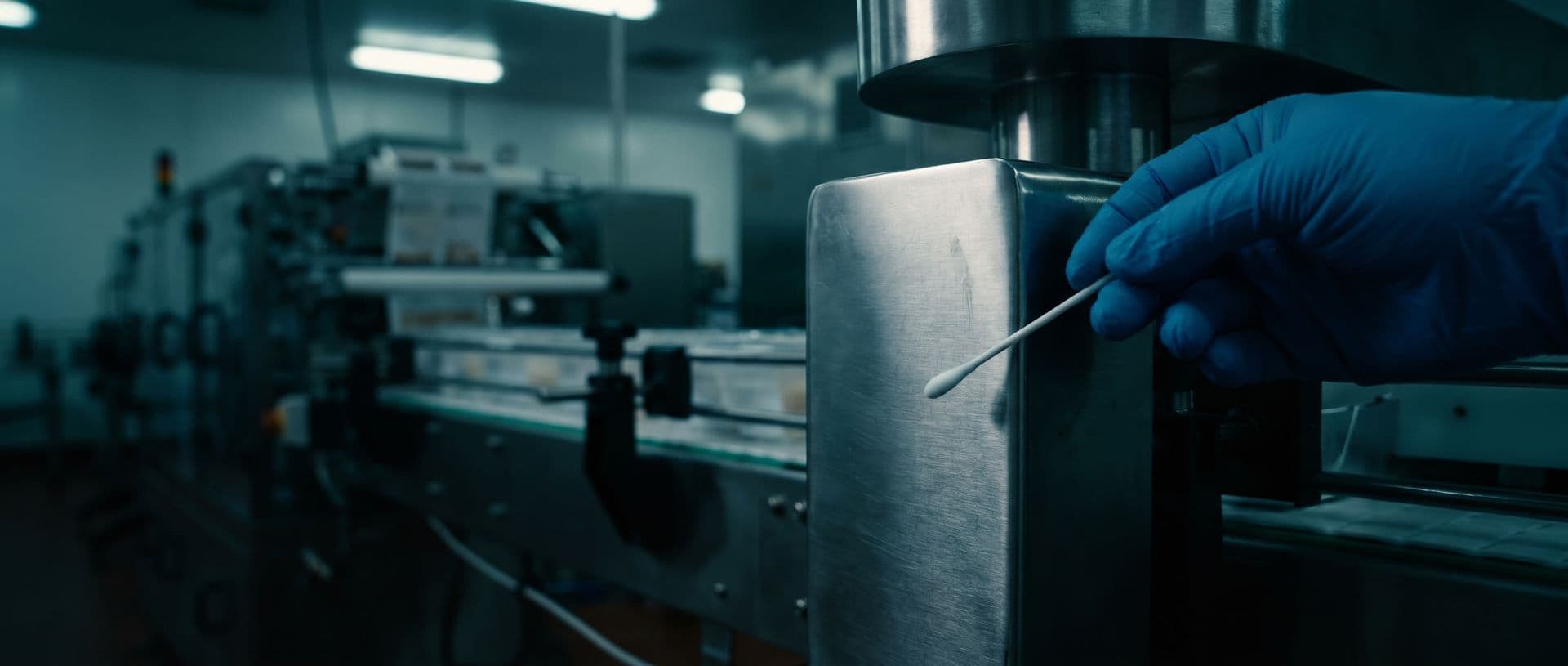
Swabs from equipment, conveyors, utensils and contact surfaces, assessed against the criteria of the client's own-check program.
Food services
Supports verification of the cleaning set out in the good practices of RDC 216/2004. The acceptance criterion is defined and registered by the lab or by the client's program.
Healthcare settings
Surface monitoring following the infection control service's protocol, when the client asks for it.
Recurring visits
Sampling plans with a calendar and frequency generate the work orders for each visit.
Each surface becomes a sample identified at the time of sampling
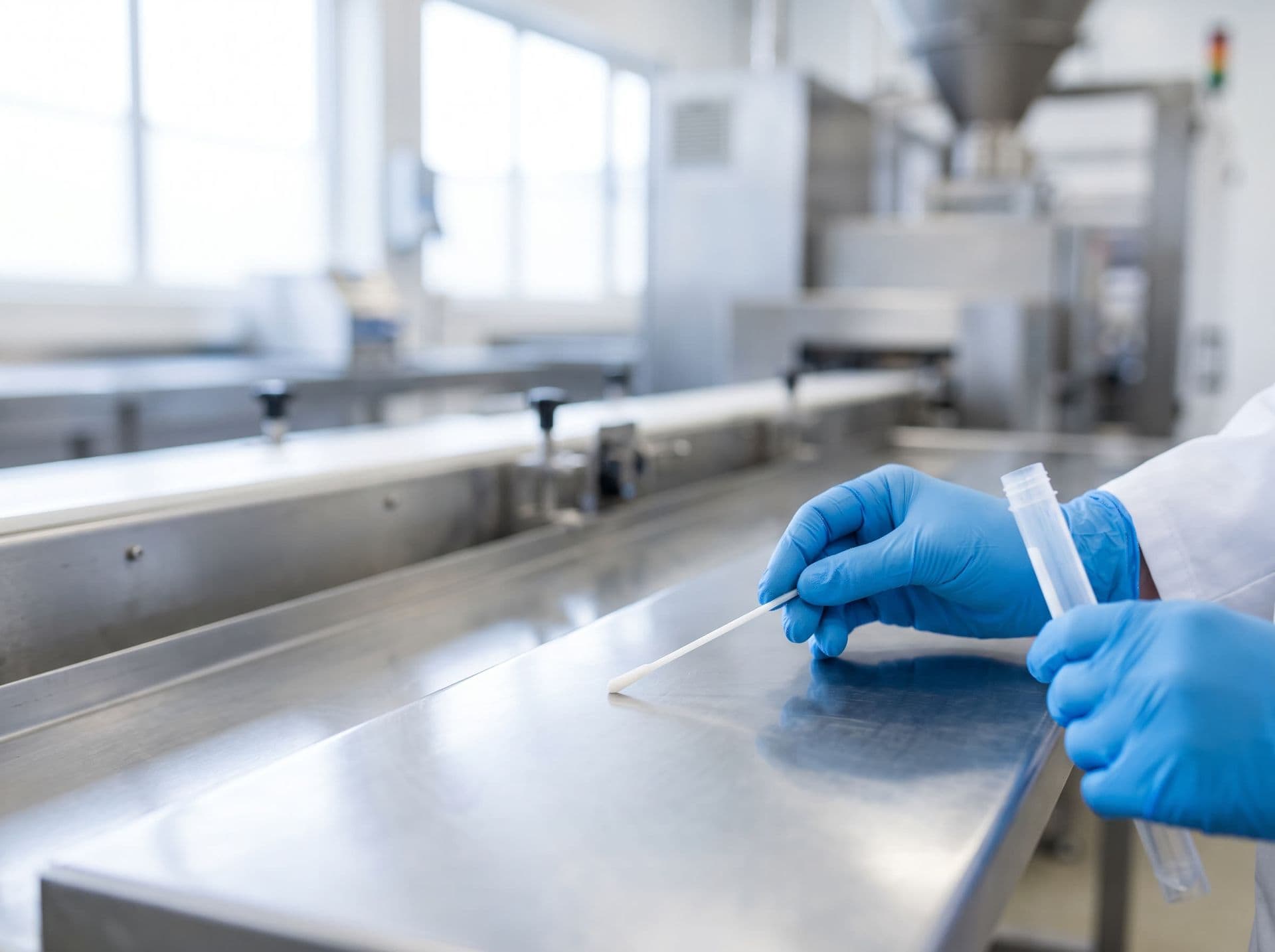
The team identifies the surface on the sample, prints a barcode or QR label and records a photo and the condition of the point. The sampling app works without internet for the operations confirmed in testing and sends the data when the connection is back.
- Barcode or QR label linking the point to the container
- Photo and condition of the point recorded at sampling
- Data synced when the connection is back
Acceptance criteria: each program sets its own
The acceptance criterion varies with the program, the method, the client and the purpose of the sampling. The lab registers the criteria it uses, and the system compares each result with them.
Client criteria and protocols
Own-check programs, client specifications and hospital protocols have their own criteria. They are not legal limits and go into the system as criteria registered by the lab.
Good practices in food services
Anvisa RDC 216/2004 covers good practices in food services, including cleaning procedures. The system supports recording that verification; the swab acceptance criterion is set in the technical program and registered by the lab.
Counts and pathogen tests
Counts, such as aerobic mesophiles and Enterobacteriaceae, and pathogen tests, such as Listeria, are entered with the unit or expression of the method, for example count per area or presence and absence.
Microbiological interpretation
Plate reading and interpretation of results remain with the analyst and the technical manager. The system records, compares with the registered criterion and organizes the history.
Technical decisions, such as acceptance criteria, decision rules, method validation and release of results, belong to the laboratory. The system records and organizes these decisions. Limits and their updates are maintained by the laboratory.
| Standard | Status | What it covers | Official source |
|---|---|---|---|
Resolução RDC nº 216, de 15 de setembro de 2004 RDC Anvisa 216/2004 | In force | Good practices for food services, such as hygiene of premises, food handlers and food preparation.Amended by RDC 52/2014. It does not set microbiological standards for food: those are in RDC 724/2022 and IN 161/2022. Its revision is on Anvisa's 2026-2027 Regulatory Agenda. | Official source |
Requisitos gerais para a competência de laboratórios de ensaio e calibração ABNT NBR ISO/IEC 17025:2017 | In force | Requirements for the competence, impartiality and consistent operation of testing and calibration laboratories. | Official source |
References checked on 26/10/2026. Limits and their updates are maintained by the laboratory.
Illustrative system screen. Demo data that does not represent client results.
One sampling point, from swab to result
The identified surface, the sample label, the photo of the point and the result compared with the program criterion are kept in the same record.
See this flow in the demoHow the system supports swab routines
From the visit plan to the report, with each point identified.
Many points per visit
The points of each visit become samples, with labels printed in batches.
Point linked to the result
The label links the surface to the container that reaches the lab, which helps reduce the risk of mixing up points.
Analysis deadlines
Each parameter can have a deadline to start the analysis and a delivery deadline, counted from sampling or from inspection, as configured by the lab.
Comparison with the program criterion
When results are entered, they are compared with the criterion registered for that client or program, and anything outside is flagged for review.
Report and export
Report in the lab's template, with review before issue, and export of results as a spreadsheet or PDF for the client's report.
Proposals, contracts and invoicing
Proposals, recurring contracts and invoicing in the same system. Modules available according to the contracted scope.
Results compared with the program criterion and reviewed before the report
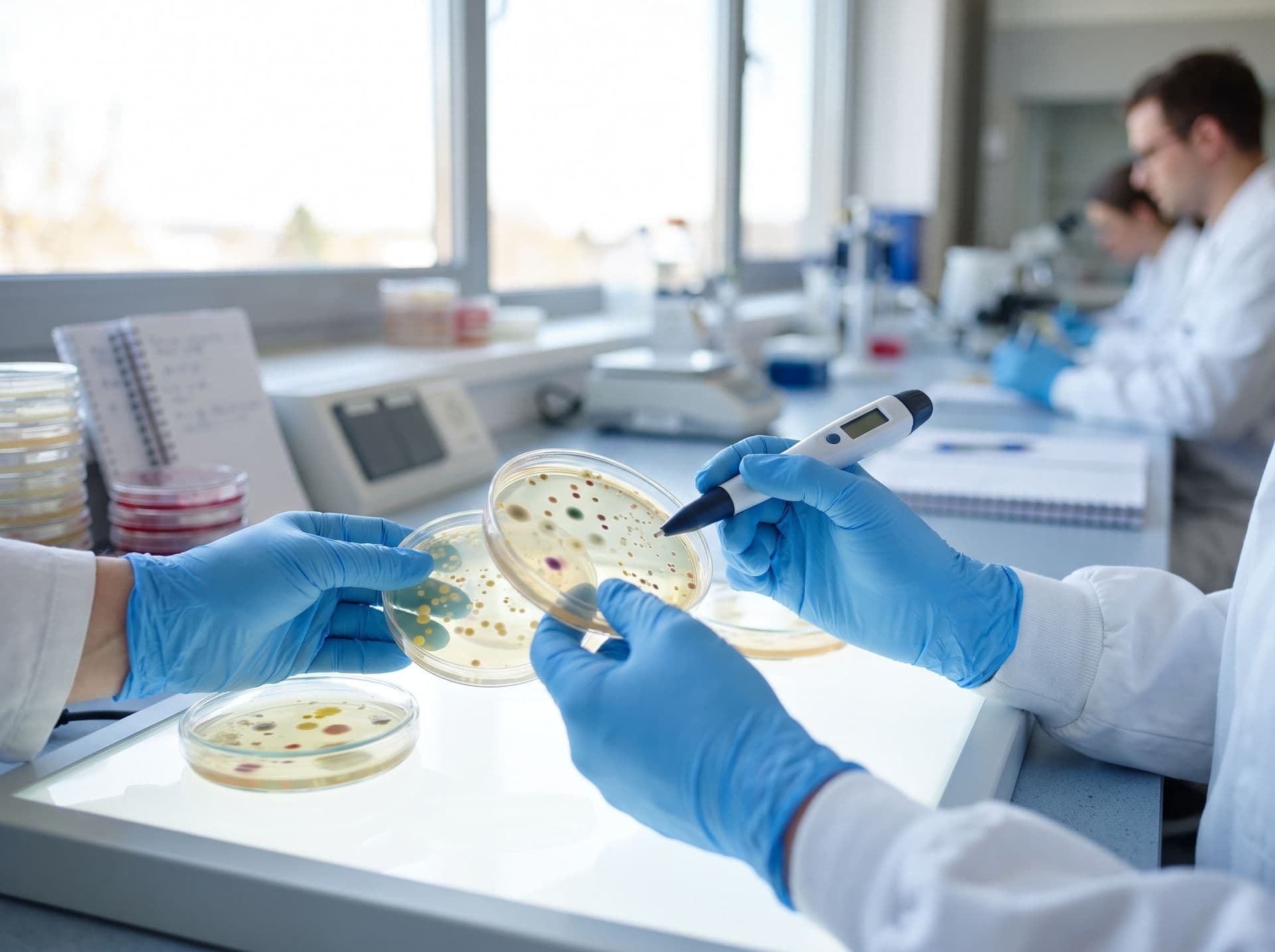
Counts and pathogen tests, such as Listeria, are compared with the criterion the lab registered for the client or program. Interpretation and signing the report remain with the technical manager.
- Program criterion registered by the lab
- Results outside the criterion flagged during review
- Export for the client's verification report
Features mentioned on this page
Each feature is shown with its current status and with what remains the lab's responsibility.
| Topic | Status | What exists today | Limit / laboratory responsibility |
|---|---|---|---|
| Regulations and limits | Depends on configuration | The laboratory registers regulations, matrices and maximum allowed values, and the system compares each result with the limits registered for the service. | Regulations are not preloaded. Registering, checking and updating limits are the laboratory's responsibility. |
| Receipt and handling of samples | Available | Pre-receipt and technical inspection of samples with barcode scanning, unique identification and a history of the stages up to disposal. | Acceptance criteria, storage conditions and handling of deviations at receipt are defined by the laboratory. |
| Sampling app with offline mode | Available | The app downloads sampling jobs, including PDFs, for work without internet. It records photos, the client's signature, GPS and checklist, and sends them in batches, with retries, when the connection returns. | Offline mode covers the operations confirmed in on-device testing. Validate your sampling flow in airplane mode during implementation. |
| Sampling | Partial | Sampling schedules with calendar and frequency that create work orders automatically, plus field sampling records in the app. | There is no statistical sampling plan, such as ISO 2859 or AQL. The sampling method and plan are defined by the laboratory. |
| Reporting of results | Available | Reports in configurable templates, with comparison against registered limits, marking of accredited tests, partial reports and revisions archived with reason and owner. | Report content, the decision rule and statements of conformity are defined and checked by the laboratory. The uncertainty shown on the report is the value entered, since the system does not calculate it. |
Current features and limits
Regulations and limits
- What exists today
- The laboratory registers regulations, matrices and maximum allowed values, and the system compares each result with the limits registered for the service.
- Limit / laboratory responsibility
- Regulations are not preloaded. Registering, checking and updating limits are the laboratory's responsibility.
Receipt and handling of samples
- What exists today
- Pre-receipt and technical inspection of samples with barcode scanning, unique identification and a history of the stages up to disposal.
- Limit / laboratory responsibility
- Acceptance criteria, storage conditions and handling of deviations at receipt are defined by the laboratory.
Sampling app with offline mode
- What exists today
- The app downloads sampling jobs, including PDFs, for work without internet. It records photos, the client's signature, GPS and checklist, and sends them in batches, with retries, when the connection returns.
- Limit / laboratory responsibility
- Offline mode covers the operations confirmed in on-device testing. Validate your sampling flow in airplane mode during implementation.
Sampling
- What exists today
- Sampling schedules with calendar and frequency that create work orders automatically, plus field sampling records in the app.
- Limit / laboratory responsibility
- There is no statistical sampling plan, such as ISO 2859 or AQL. The sampling method and plan are defined by the laboratory.
Reporting of results
- What exists today
- Reports in configurable templates, with comparison against registered limits, marking of accredited tests, partial reports and revisions archived with reason and owner.
- Limit / laboratory responsibility
- Report content, the decision rule and statements of conformity are defined and checked by the laboratory. The uncertainty shown on the report is the value entered, since the system does not calculate it.
Frequently asked questions
Does the system ship with swab acceptance criteria?
No. The criteria are defined by the lab or by the client's program and registered in the system. During implementation, our team helps build these records.
Does RDC 216/2004 set the limit for surface swabs?
RDC 216/2004 covers good practices in food services, including cleaning. The swab acceptance criterion is set in the applicable technical program and registered by the lab.
How does the sampling point stay linked to the result?
Each swab gets a barcode or QR label at sampling, linked to the identified surface. The result is entered on that label's sample, which helps reduce the risk of mixing up points.
Can I use different criteria for each client?
Yes. Each client or program can have its own set of registered criteria, and the system compares each result with the set linked to the service.
Does sampling work without internet?
The app downloads the sampling jobs for offline work and sends the data when the connection is back. Offline mode covers the operations confirmed in testing on the device. Validate your sampling workflow in airplane mode during implementation.
Does the system track deadlines for microbiological analyses?
Each parameter can have a deadline to start the analysis and a delivery deadline, and the sample keeps its history from sampling onward. Incubation time follows the lab's method.
Related pages
- LIMS for samples, analyses, review and reportsHow the lab organizes each sample from intake to report.
- Quality management for laboratoriesQuality control, documents, nonconformities and risks.
- Integrations with instruments and systemsResult import by file, API, webhooks and ERP.
- Food and beverage laboratoriesSample and batch traceability, from intake to report.
See the swab routine with your clients' criteria
Free online demo, about 30 minutes long. Our team adapts the examples to your laboratory's routine.