

Sample and report management for agribusiness and industrial testing
Organize services, matrices, methods and test records, from sampling to report review, with controls configurable for your scope.
For agribusiness and industrial testing labs
Soil, fertilizers, grain, fuels, oils and process water: each matrix with its own parameter package, and each batch of samples with a different deadline and client.
Volume organized by matrix and method
Work orders, samples, containers and parameters organized by matrix and method, with barcode or QR labels and tracking of analyses by analyst.
A history to answer a dispute
Who sampled, who analyzed and the method used are recorded on the sample and the result, with a change history. Reference materials are recorded in quality control, by lot and expiry date.
Standardized reports
Configurable templates and technical review help standardize the document before it is issued.
Field sampling
Soil, water and grain sampling in the app, with photos and GPS. Offline mode covers the operations confirmed in testing on the device.
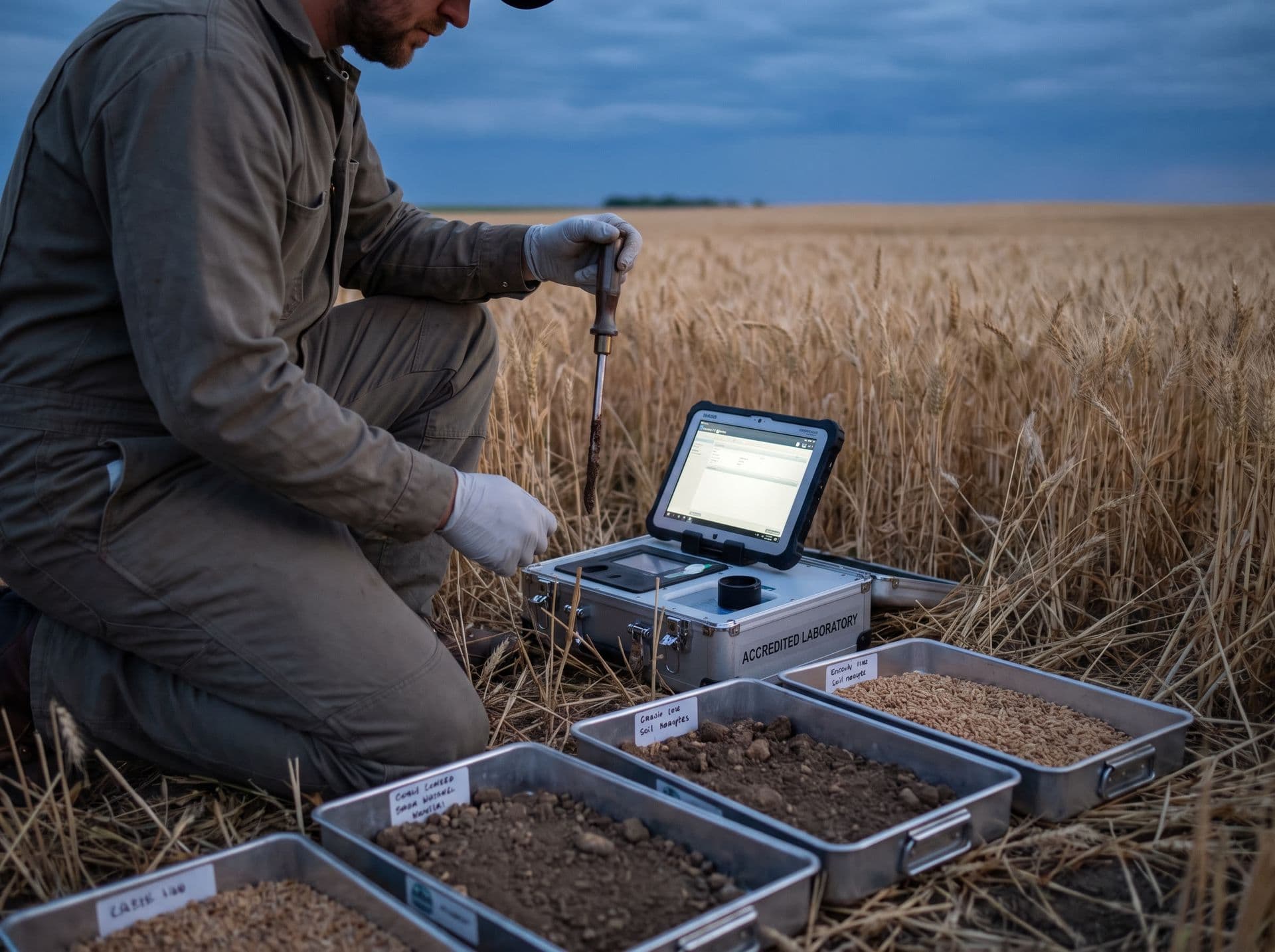
Each sample comes in with who collected it, when and where
The technician records point, data and photos in the sampling app, including without signal for the operations confirmed in testing, and data is sent when the connection is back.
- Sampling app with offline mode
- Point, data and photos of the sample
- Record of who collected it, when and where
References and regulations: what stays with the lab
MAPA regulations, client specifications and test standards vary by product and by client. The lab registers the references it uses, with the edition stated, and the system compares results with them.
Regulations and specifications
MAPA (Brazilian Ministry of Agriculture) regulations that apply to the product, client specifications and technical standards are registered as references by the lab. The system does not update these references.
Report templates
Report templates are set up by the lab. The system does not declare that the report meets MAPA, client or regulator requirements; the content is checked by the technical manager.
Controlled substances
Report by period of controlled substances, for the accountability the lab provides to regulators. Checking and submission are done by the lab.
Accredited scope
Accredited tests flagged on the report, according to the lab's scope. ISO/IEC 17025 accreditation is granted to the laboratory for the applicable scope, not to the software.
Technical decisions, such as acceptance criteria, decision rules, method validation and release of results, belong to the laboratory. The system records and organizes these decisions. Limits and their updates are maintained by the laboratory.
| Standard | Status | What it covers | Official source |
|---|---|---|---|
Requisitos gerais para a competência de laboratórios de ensaio e calibração ABNT NBR ISO/IEC 17025:2017 | In force | Requirements for the competence, impartiality and consistent operation of testing and calibration laboratories. | Official source |
References checked on 26/10/2026. Limits and their updates are maintained by the laboratory.
Illustrative system screen. Demo data that does not represent client results.
Analysis queue by sample, method and parameter
The analyst sees pending analyses by sample, service and parameter, enters results and sends them for review. The report is issued after the technical review.
See this flow in the demoHow the system supports operations
From bench to report, with controls the lab configures.
Instrument results by file import
Instrument results come in by file (CSV, TXT, XLS, XLSX, ASTM, HL7, XML, JSON or fixed-width text), through a local agent that watches a folder, by manual upload or by webhook. Each instrument is configured and tested with the laboratory.
Analytical quality control
Control charts and Westgard rules, with reference materials tracked by lot and expiry date. The action taken when a rule is violated is configured by the lab.
Equipment and calibration
Calibration expiry warnings and maintenance tracking. The default is to warn; blocking applies to equipment flagged as critical or when the lab turns on blocking mode.
Suppliers
Supplier qualification with a quality index and assessment history. Selection and assessment criteria are defined by the lab.
Analysis deadlines
Each parameter can have a deadline to start the analysis and a delivery deadline, so the team can spot pending items before delivery.
Change history
Who changed what and when in results and in the main records, to rebuild the path of a result.
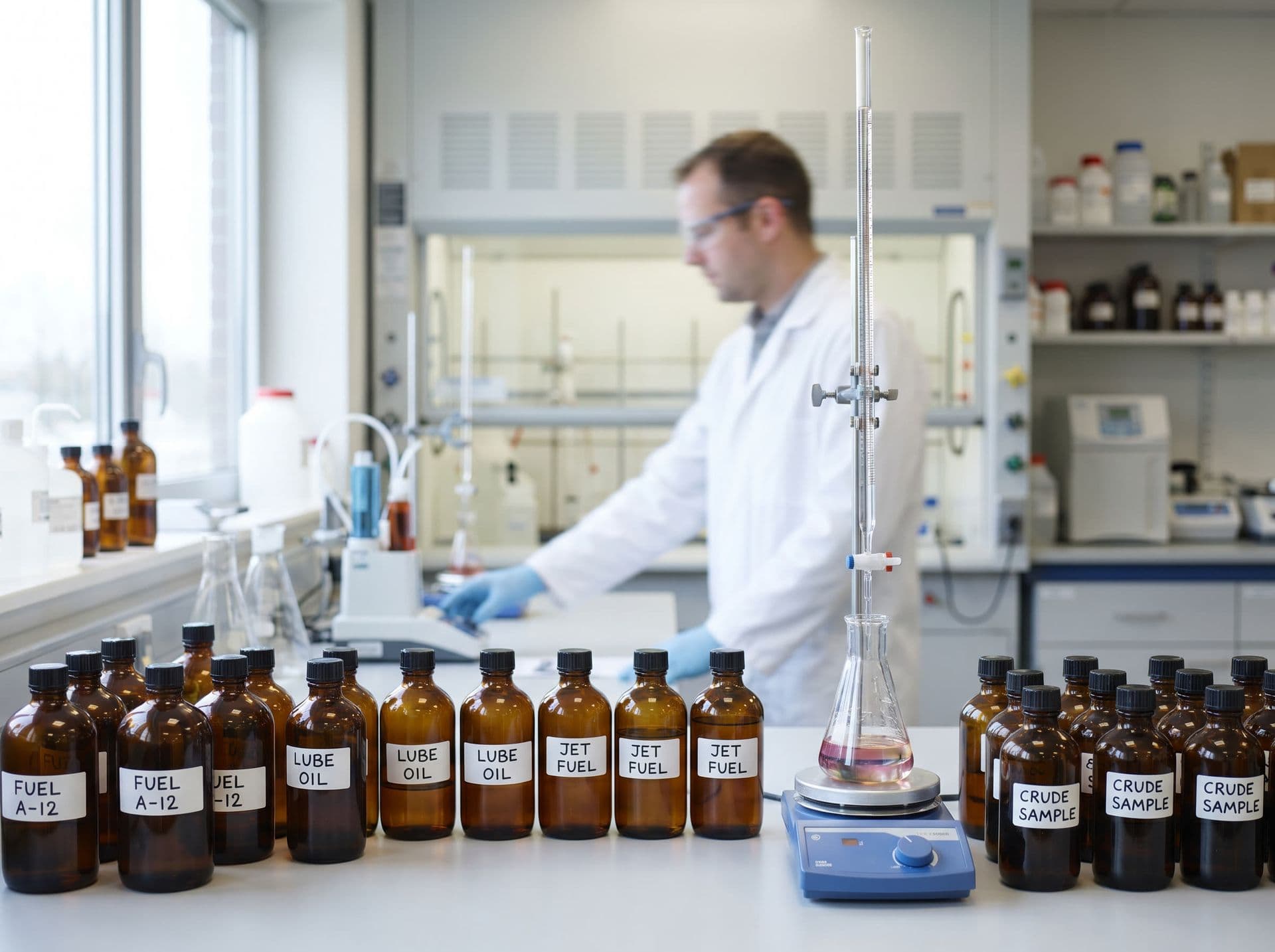
Reviewed results and a report in the lab's template
Instrument and spreadsheet results imported by file, analytical quality control and a report in the template the lab defines. The technical manager reviews, signs and releases.
- Results by file import, without retyping
- Quality control with charts and Westgard rules
- Report reviewed before issue
Features mentioned on this page
Each feature is shown with its current status and with what remains the lab's responsibility.
| Topic | Status | What exists today | Limit / laboratory responsibility |
|---|---|---|---|
| Regulations and limits | Depends on configuration | The laboratory registers regulations, matrices and maximum allowed values, and the system compares each result with the limits registered for the service. | Regulations are not preloaded. Registering, checking and updating limits are the laboratory's responsibility. |
| Receipt and handling of samples | Available | Pre-receipt and technical inspection of samples with barcode scanning, unique identification and a history of the stages up to disposal. | Acceptance criteria, storage conditions and handling of deviations at receipt are defined by the laboratory. |
| Instrument result import | Via file import | Imports results from CSV, TXT, XLS and XLSX files and from ASTM E1394, HL7 v2, XML, JSON and fixed-width text formats. Files arrive through an agent installed at the laboratory that watches a folder, by manual upload or by webhook. | The system does not connect to the serial port or directly to the instrument. The ready-made import profiles are generic, with no reader specific to a manufacturer or model, and each instrument is configured and tested with the laboratory. |
| Ensuring the validity of results | Available | Analytical quality control with configurable control types, Westgard rules and Levey-Jennings, CUSUM and EWMA charts. | The control plan, acceptance criteria and participation in proficiency testing are defined by the laboratory. The action on failure follows each rule's setup. |
| Equipment and calibration | Depends on configuration | Equipment register with life cycle, calibration with certificate and uncertainty, maintenance and expiry alerts. Using expired or failed equipment triggers an alert or a block, depending on the setup. | The default is to warn. Blocking applies to equipment flagged as critical or when the laboratory turns on blocking mode. |
| Reporting of results | Available | Reports in configurable templates, with comparison against registered limits, marking of accredited tests, partial reports and revisions archived with reason and owner. | Report content, the decision rule and statements of conformity are defined and checked by the laboratory. The uncertainty shown on the report is the value entered, since the system does not calculate it. |
Current features and limits
Regulations and limits
- What exists today
- The laboratory registers regulations, matrices and maximum allowed values, and the system compares each result with the limits registered for the service.
- Limit / laboratory responsibility
- Regulations are not preloaded. Registering, checking and updating limits are the laboratory's responsibility.
Receipt and handling of samples
- What exists today
- Pre-receipt and technical inspection of samples with barcode scanning, unique identification and a history of the stages up to disposal.
- Limit / laboratory responsibility
- Acceptance criteria, storage conditions and handling of deviations at receipt are defined by the laboratory.
Instrument result import
- What exists today
- Imports results from CSV, TXT, XLS and XLSX files and from ASTM E1394, HL7 v2, XML, JSON and fixed-width text formats. Files arrive through an agent installed at the laboratory that watches a folder, by manual upload or by webhook.
- Limit / laboratory responsibility
- The system does not connect to the serial port or directly to the instrument. The ready-made import profiles are generic, with no reader specific to a manufacturer or model, and each instrument is configured and tested with the laboratory.
Ensuring the validity of results
- What exists today
- Analytical quality control with configurable control types, Westgard rules and Levey-Jennings, CUSUM and EWMA charts.
- Limit / laboratory responsibility
- The control plan, acceptance criteria and participation in proficiency testing are defined by the laboratory. The action on failure follows each rule's setup.
Equipment and calibration
- What exists today
- Equipment register with life cycle, calibration with certificate and uncertainty, maintenance and expiry alerts. Using expired or failed equipment triggers an alert or a block, depending on the setup.
- Limit / laboratory responsibility
- The default is to warn. Blocking applies to equipment flagged as critical or when the laboratory turns on blocking mode.
Reporting of results
- What exists today
- Reports in configurable templates, with comparison against registered limits, marking of accredited tests, partial reports and revisions archived with reason and owner.
- Limit / laboratory responsibility
- Report content, the decision rule and statements of conformity are defined and checked by the laboratory. The uncertainty shown on the report is the value entered, since the system does not calculate it.
Frequently asked questions
Does the system read the instrument directly, in real time?
Continuous serial capture is not available in the current version. Instrument results come in by file (CSV, TXT, XLS, XLSX, ASTM, HL7, XML, JSON or fixed-width text), through a local agent that watches a folder, by manual upload or by webhook. Each instrument is configured and tested with the laboratory.
Will the report follow the format MAPA and my clients ask for?
Report templates are configurable, with header, footer, signature and variables filled in by the system. The lab sets up the template, and the technical manager checks the content. The system does not declare that the report meets MAPA, client or regulator requirements.
Does the system ship with MAPA regulations registered?
No. The lab registers the references it uses and keeps them up to date. During implementation, our team helps build these records.
What about field sampling with no signal?
The app downloads the sampling jobs for offline work and sends the data when the connection is back. Offline mode covers the operations confirmed in testing on the device. Validate your sampling workflow in airplane mode during implementation.
Does the system help with controlled substances?
Yes. The system generates a report by period of controlled substances, for the accountability the lab provides to regulators. Checking and submission are done by the lab.
Related pages
- LIMS for samples, analyses, review and reportsHow the lab organizes each sample from intake to report.
- Quality management for laboratoriesQuality control, documents, nonconformities and risks.
- Integrations with instruments and systemsResult import by file, API, webhooks and ERP.
- Environmental laboratoriesWater, effluents, soil and environmental monitoring.
See the sample and report flow with your lab's scope
Free online demo, about 30 minutes long. Our team adapts the examples to your laboratory's routine.