From water sampling to the report: follow each step in one system
Organize points and campaigns, record samples in the field, control analyses and compare results with the limits your laboratory has registered and validated for each matrix.
Who it is for
For laboratories that test drinking water, effluents and water bodies, with high sample volumes and a different reference for each matrix.
Drinking water.
Control and surveillance of water quality. Each result is compared with the potability limits the laboratory has registered.
Effluents.
Discharge monitoring for BOD, COD, solids, nutrients and the other parameters required by the environmental license.
Surface water.
Rivers, reservoirs and other water bodies evaluated against the standards of the class set for each point.
Recurring campaigns.
Sampling plans with a calendar and frequency generate the work orders for each cycle. The sampling plan is defined by the laboratory.
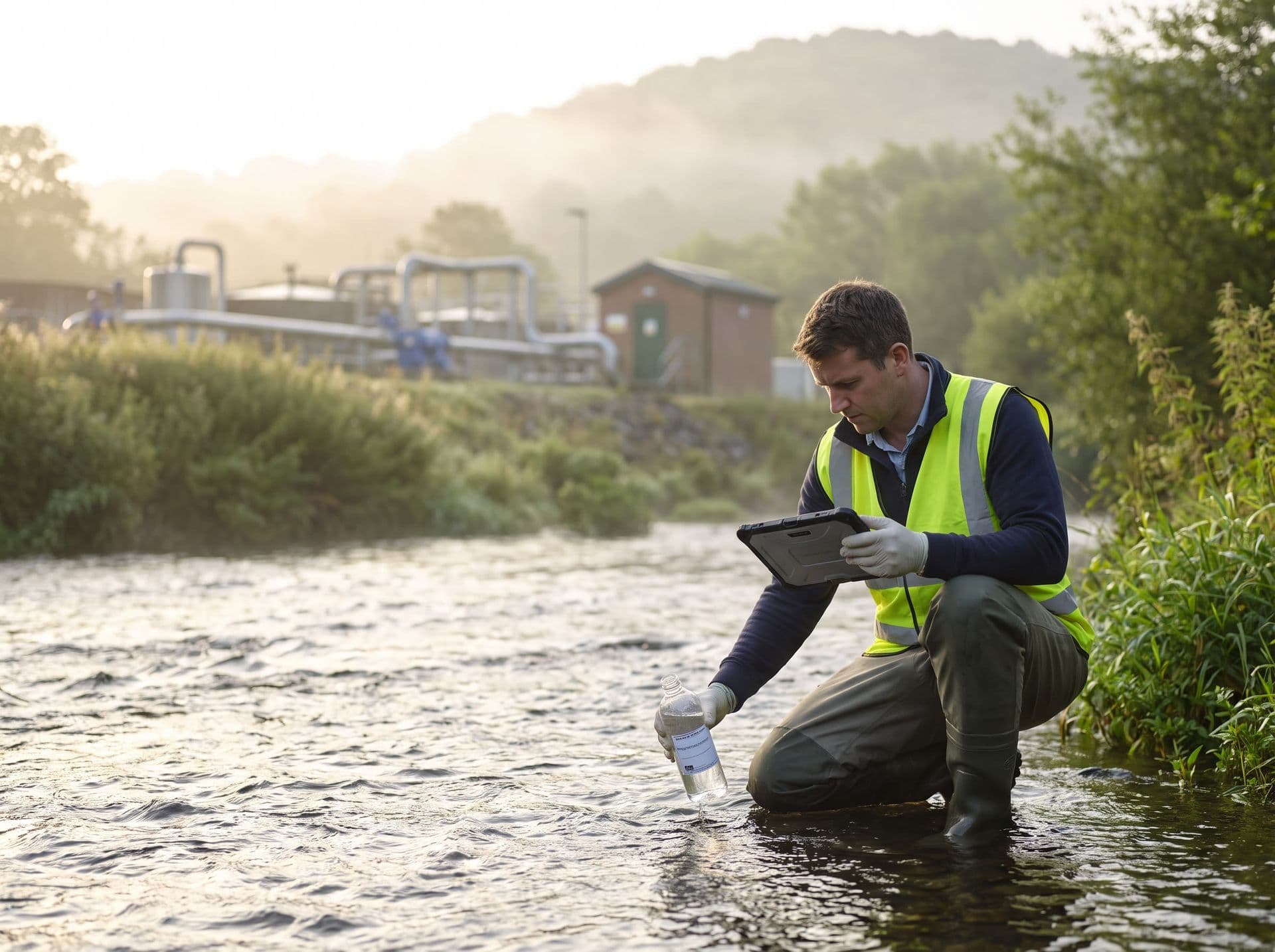
Sampling records even where there is no signal
Intakes, treatment plants and rivers often have no internet. The app downloads the day's jobs, records photos, GPS, signature and checklist offline and sends the records when the connection returns.
- The day's jobs downloaded to the device
- Photos, GPS and checklist attached to the sample
- Batch sending when the connection returns
Limits and references: the laboratory registers, the system compares
Gerencialab does not include preloaded regulations. Your laboratory registers the regulations, matrices and maximum allowed values it uses. On entry, the system compares each result with those limits and highlights what is out.
Example: drinking water.
The laboratory registers the parameters and limits of Annex XX of Consolidation Ordinance GM/MS No. 5/2017, as worded by Ordinance GM/MS 888/2021. Control: each result is compared on entry. Limitation: the system does not track changes to the standard; the laboratory updates the registry.
Example: effluents.
The laboratory registers the required discharge standards, such as those in CONAMA 430/2011, and the license conditions. Control: each parameter is compared with the service's standard. Limitation: state and license standards also have to be registered.
Example: surface water.
The laboratory registers the per-class standards of CONAMA 357/2005 and links the class to the point's service. Control: comparison with the registered class. Limitation: the water body's class is set by the competent authority, not by the system.
One reference per service.
Drinking water, effluent and surface water stay in separate services, each with its linked regulation. This helps reduce table mix-ups during review.
Limits and their updates are maintained by the laboratory.
Technical decisions, such as acceptance criteria, decision rules, method validation and release of results, belong to the laboratory. The system records and organizes these decisions.
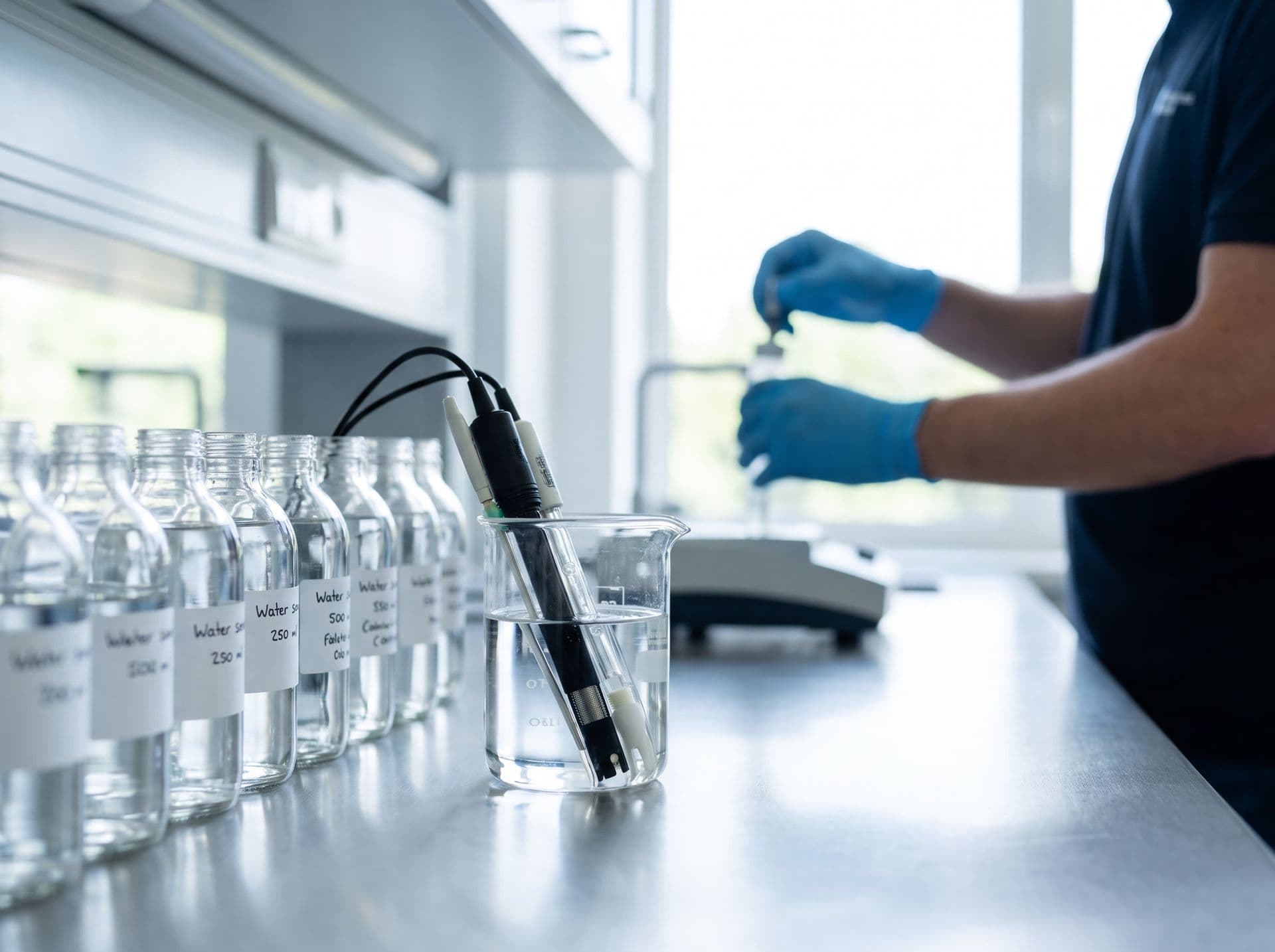
Results compared with the limit the laboratory registered
On entry, each parameter is compared with the service's limits, and anything out is highlighted for technical review. The report comes out in a configurable template, with signature and version control.
- Comparison with the limits registered for the service
- Results review before signature and release
- ICP-Brasil signature when an A1 certificate is registered
SISAGUA: exported data, submission by your team
SISAGUA is Brazil's drinking water surveillance information system. Export structured data to help prepare the report. Submission to SISAGUA is done by your team, not automatically by the system.
Spreadsheets to prepare the report.
Results can be exported as XLSX or CSV spreadsheets, which the team uses to build the report file.
Checking and submission by your team.
Checking the data and submitting it to SISAGUA remain with the team responsible for water quality control.
The system exports results as spreadsheets that help prepare the SISAGUA submission. It does not generate the official layout or send the data to SISAGUA.
Time since sampling and test start deadlines
Recording the time since sampling is not the same as validating holding time automatically. Here is what the system records and what stays with the laboratory.
Sampling recorded with date and time.
The sample keeps the sampling date and the history of each step, with author and time.
Start deadline registered per test.
In the test setup, the laboratory enters the deadline in hours, counted from sampling.
Flag in review, with the rule turned on.
When the laboratory turns the rule on, a test started after the deadline is flagged in the results review and appears on the report without the accreditation mark.
Out-of-time analysis is not blocked.
The system does not prevent analysis after the deadline. Preservation times, sample acceptance criteria and the decision on the result belong to the laboratory, according to the method.
How Gerencialab supports the routine
From the field sheet to the report, with less rework between steps.
Campaigns with many samples.
Work orders are generated from the sampling plan, composite samples are recorded and barcode or QR labels print in batches.
Monitoring deadlines in view.
Recurring sampling, a calendar with holidays and the work order flow show what is due and when.
Daily route for the sampler.
The itinerary comes out with the order of stops. Route notices via WhatsApp work when that integration is configured.
Points and field data.
The laboratory registers the points and builds forms with the sampling fields, such as depth, point condition and notes.
Instrument results by file.
Instrument results come in by file (CSV, TXT, XLS, XLSX, ASTM, HL7, XML, JSON or fixed-width text), through a local agent that watches a folder, by manual upload or by webhook. Each instrument is configured and tested with the laboratory. Continuous serial capture is not available in the current version.
Each sample has a history from proposal to report, and the audit trail records who did what and when in the main records and results. During an audit, the team looks up a result's history instead of searching through folders.
Modules used in water and sanitation
Modules available according to the contracted scope.
Sampling and logistics.
Routes, sampler schedule, recurring sampling and an app with offline mode and GPS.
Samples.
Intake with barcode or QR, photos, composite samples and history up to disposal.
Laboratory and analyses.
Methods and parameters by matrix, results review and import of instrument and spreadsheet files.
Quality control.
Reference materials controlled by lot and expiry and control charts with Westgard rules.
Reports and templates.
Configurable template, signature and PDF, with template version control.
BI and reports.
Dashboards and exports in XLSX, CSV or PDF for management and to prepare the SISAGUA report.
What exists today and where the limits are
Status of each feature mentioned on this page, for the current version of the system.
| Topic | Status | What exists today | Limit / laboratory responsibility |
|---|---|---|---|
| Regulations and limits | Depends on configuration | The laboratory registers regulations, matrices and maximum allowed values, and the system compares each result with the limits registered for the service. | Regulations are not preloaded. Registering, checking and updating limits are the laboratory's responsibility. |
| Data for SISAGUA | Partial | Results can be exported as generic spreadsheets, which the team uses to prepare the SISAGUA submission (Brazil's drinking water surveillance system). | The system does not generate the SISAGUA layout or send data to the government system. Checking and submitting are done by the laboratory. |
| Sampling app with offline mode | Available | The app downloads sampling jobs, including PDFs, for work without internet. It records photos, the client's signature, GPS and checklist, and sends them in batches, with retries, when the connection returns. | Offline mode covers the operations confirmed in on-device testing. Validate your sampling flow in airplane mode during implementation. |
| Sampling | Partial | Sampling schedules with calendar and frequency that create work orders automatically, plus field sampling records in the app. | There is no statistical sampling plan, such as ISO 2859 or AQL. The sampling method and plan are defined by the laboratory. |
| Instrument result import | Via file import | Imports results from CSV, TXT, XLS and XLSX files and from ASTM E1394, HL7 v2, XML, JSON and fixed-width text formats. Files arrive through an agent installed at the laboratory that watches a folder, by manual upload or by webhook. | The system does not connect to the serial port or directly to the instrument. The ready-made import profiles are generic, with no reader specific to a manufacturer or model, and each instrument is configured and tested with the laboratory. |
Current features and limits
Regulations and limits
- What exists today
- The laboratory registers regulations, matrices and maximum allowed values, and the system compares each result with the limits registered for the service.
- Limit / laboratory responsibility
- Regulations are not preloaded. Registering, checking and updating limits are the laboratory's responsibility.
Data for SISAGUA
- What exists today
- Results can be exported as generic spreadsheets, which the team uses to prepare the SISAGUA submission (Brazil's drinking water surveillance system).
- Limit / laboratory responsibility
- The system does not generate the SISAGUA layout or send data to the government system. Checking and submitting are done by the laboratory.
Sampling app with offline mode
- What exists today
- The app downloads sampling jobs, including PDFs, for work without internet. It records photos, the client's signature, GPS and checklist, and sends them in batches, with retries, when the connection returns.
- Limit / laboratory responsibility
- Offline mode covers the operations confirmed in on-device testing. Validate your sampling flow in airplane mode during implementation.
Sampling
- What exists today
- Sampling schedules with calendar and frequency that create work orders automatically, plus field sampling records in the app.
- Limit / laboratory responsibility
- There is no statistical sampling plan, such as ISO 2859 or AQL. The sampling method and plan are defined by the laboratory.
Instrument result import
- What exists today
- Imports results from CSV, TXT, XLS and XLSX files and from ASTM E1394, HL7 v2, XML, JSON and fixed-width text formats. Files arrive through an agent installed at the laboratory that watches a folder, by manual upload or by webhook.
- Limit / laboratory responsibility
- The system does not connect to the serial port or directly to the instrument. The ready-made import profiles are generic, with no reader specific to a manufacturer or model, and each instrument is configured and tested with the laboratory.
Standards cited on this page
The standards below are examples of references the laboratory can register. They are not included in the system.
| Standard | Status | What it covers | Official source |
|---|---|---|---|
Portaria GM/MS nº 888, de 4 de maio de 2021 Portaria GM/MS 888/2021 | In force | Control and surveillance procedures for drinking water quality and the potability standard.The text in force is Annex XX of Consolidation Ordinance GM/MS No. 5/2017, as worded by Ordinance 888/2021 and Ordinance GM/MS No. 2,472/2021. The annex provides for a review within five years or at any time. | Official source |
Resolução CONAMA nº 357, de 17 de março de 2005 CONAMA 357/2005 | Partially revoked | Classification of water bodies, guidelines for assigning classes and quality standards per class.CONAMA 430/2011 revoked the articles on effluent discharge (arts. 24 to 37, 39, 43, 44 and 46). The classification and the standards per class remain in force. It was also amended by Resolutions 370/2006, 397/2008 and 410/2009. | Official source |
Resolução CONAMA nº 430, de 13 de maio de 2011 CONAMA 430/2011 | In force | Conditions and standards for discharging effluents into receiving water bodies.Complements and amends CONAMA 357/2005. | Official source |
References checked on 26/10/2026. Limits and their updates are maintained by the laboratory.
Frequently asked questions
Are the limits of Ordinance GM/MS 888/2021 and CONAMA 357/2005 included in the system?
No. The system has a registry for regulations, matrices and maximum allowed values, and the laboratory enters, checks and updates the limits. During onboarding, our team helps build that registry.
Does the system submit data to SISAGUA?
No. Export structured data to help prepare the report. Submission to SISAGUA is done by your team, not automatically by the system. Today the export uses generic spreadsheets and does not generate the official SISAGUA layout.
How does sampling work where there is no signal?
The app downloads the day's sampling jobs and records photos, GPS, signature and checklist without internet. When the connection returns, it sends the records in batches, retrying if a send fails. Offline mode covers the operations confirmed in testing on the device. Validate your sampling flow in airplane mode during onboarding.
How does the system know which limit to use?
Each service has its linked regulation. Drinking water, effluent and surface water stay in separate services, each with the limits the laboratory registered.
Does the system control holding time?
In part. The laboratory registers each test's start deadline, in hours from sampling. With the rule turned on, a test started after the deadline is flagged in review and appears on the report without the accreditation mark. The system does not block the analysis, and the decision on the sample belongs to the laboratory.
Does it import instrument results?
Instrument results come in by file (CSV, TXT, XLS, XLSX, ASTM, HL7, XML, JSON or fixed-width text), through a local agent that watches a folder, by manual upload or by webhook. Each instrument is configured and tested with the laboratory. Continuous serial capture is not available in the current version.
See Gerencialab with your water laboratory's routine.
In the demo, we show limit registration, sampling with the app and report issuance with examples from your sample types.