
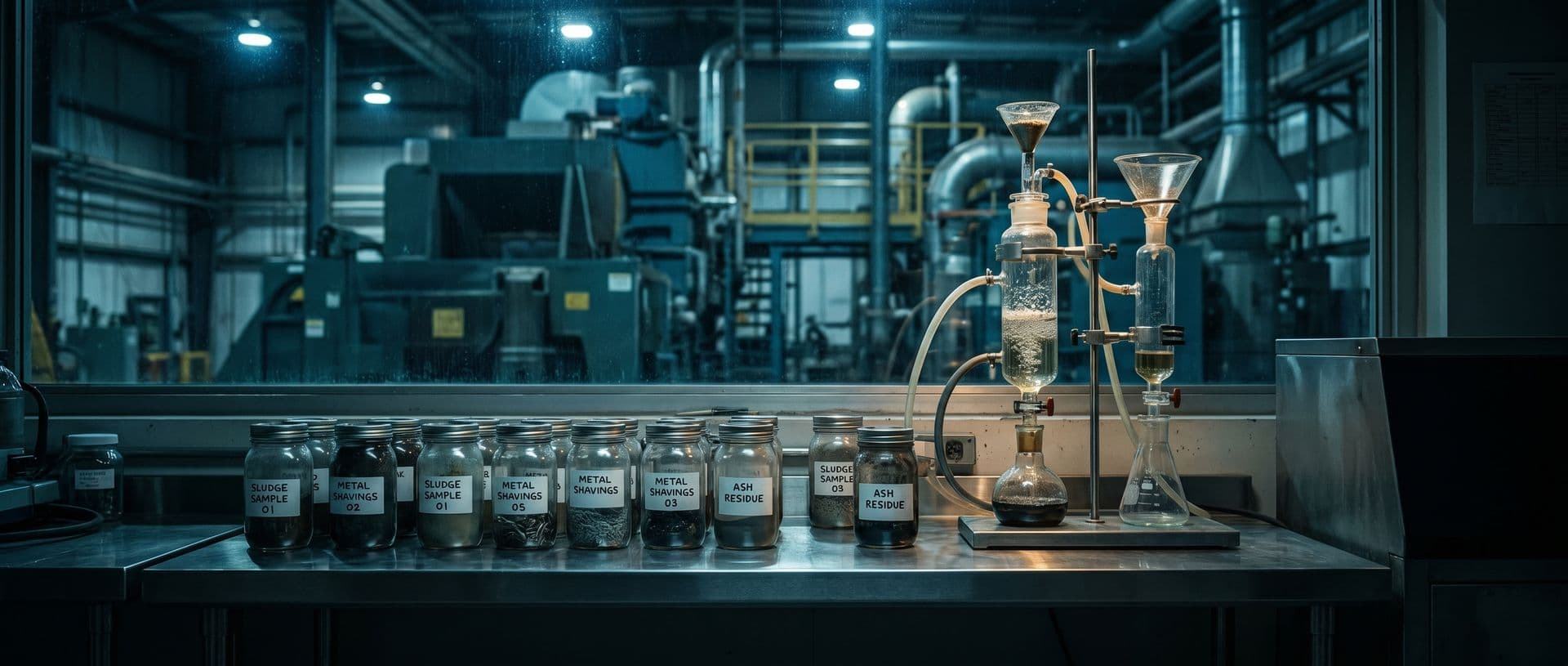
Solid waste testing with traceable history and configurable criteria
Record sampling, results and the references used to assess the waste. Classification rules and the applicable edition of the standard must be defined and validated by the technical manager.
For labs that test solid waste
Laboratories that receive waste from industries, landfills and other generators, with tests on the waste and on the extracts, and reports that the generator uses for licensing and disposal.
Sampling recorded from the field
Point, container type, composition and condition of the waste are recorded on the sample, with photos and GPS in the sampling app. Sampling follows the procedure the lab adopts, such as ABNT NBR 10007:2004.
Tests on the waste and the extracts in one report
Tests on the raw waste, the leachate extract and the solubilized extract can be combined in one report, each with its own registered parameters, methods and limits.
Periodic characterizations
Sampling plans with a calendar and frequency generate the work orders for each client's recurring characterizations.
Volume kept in order
Several waste matrices per client, with labels printed in batches and tracking of each sample's stages.
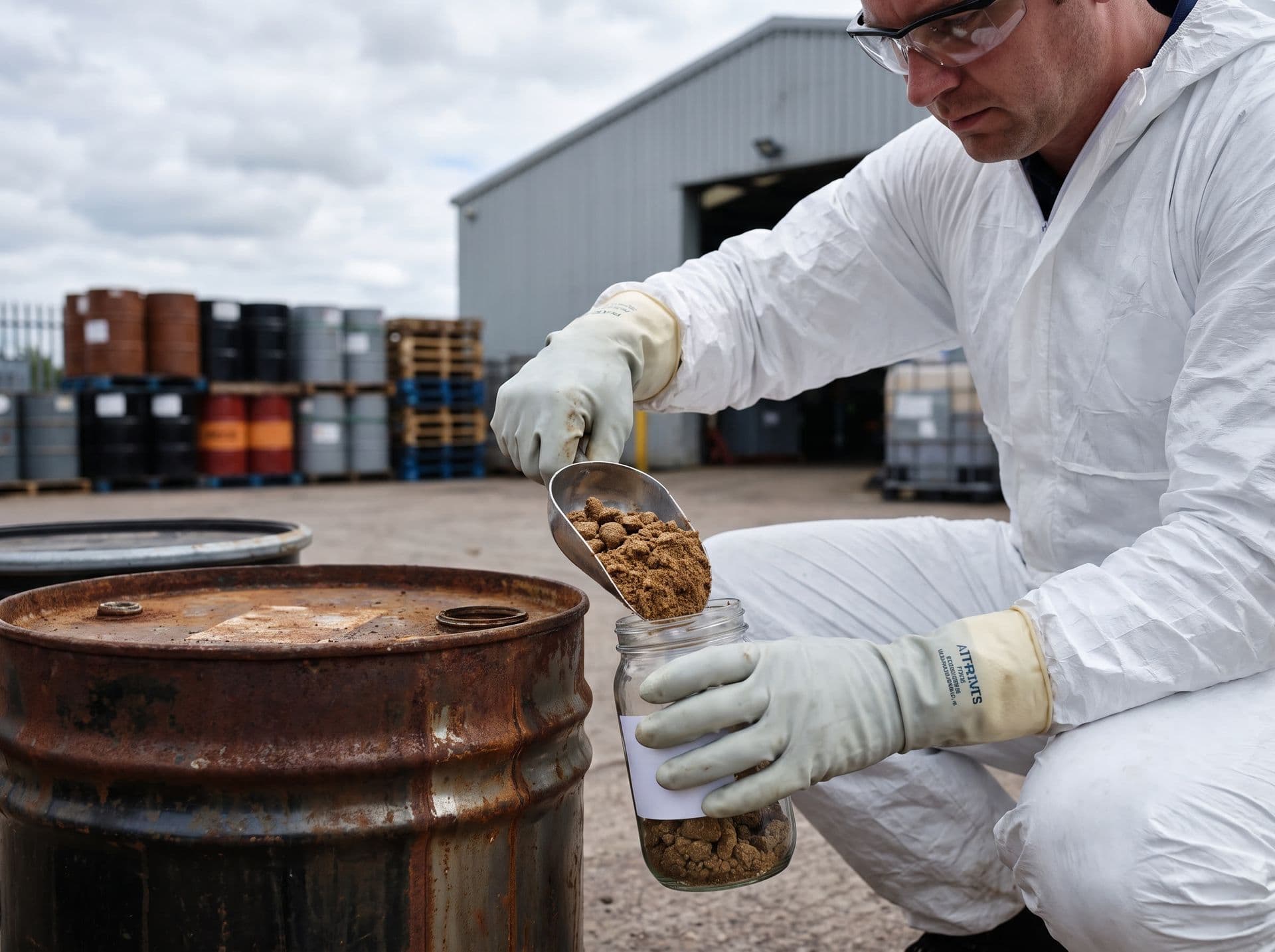
The sample recorded from the yard to the report
A pile, a drum or a heterogeneous batch: the team records point, composition and condition in the field, with photos and history. The sampling procedure is stated on the sample and follows the result to the report.
- Point, composition and condition recorded in the field, with photos
- Sampling app with offline mode for the operations confirmed in testing
- Sample history from collection to report
Waste classification: what changed and who decides
On 27/11/2024, ABNT published ABNT NBR 10004-1:2024 and ABNT NBR 10004-2:2024, which superseded ABNT NBR 10004:2004. The system has no classification rule of its own, neither for the 2004 edition nor for the 2024 series: the lab registers the criteria of the edition required in each case, and the technical manager decides the classification.
ABNT NBR 10004:2024 series
Part 1 sets the classification requirements, and Part 2, the General Waste Classification System. The series uses Class 1 (hazardous) and Class 2 (non-hazardous).
2004 edition and transition
ABNT NBR 10004:2004, which classified waste as Class I, II-A and II-B, was cancelled by ABNT on 27/11/2024 and superseded by the 2024 series. Older licences and contracts may still cite that edition, and industry sources mention a transition period not yet confirmed in the text of the standard. Check with the environmental agency which edition applies to each client.
Leaching and solubilization
ABNT NBR 10005:2004 (leachate extract) and ABNT NBR 10006:2004 (solubilized extract) remain in force as test procedures. In the 2004 edition of NBR 10004, both extracts were part of the classification; in the 2024 series, that role changed. The lab runs the tests the generator or the environmental agency asks for.
Comparison kept apart from the decision
The system compares each parameter with the limits registered by the lab and flags what falls outside. It does not classify the waste. The classification is decided by the technical manager and recorded in the report.
Technical decisions, such as acceptance criteria, decision rules, method validation and release of results, belong to the laboratory. The system records and organizes these decisions. Limits and their updates are maintained by the laboratory.
| Standard | Status | What it covers | Official source |
|---|---|---|---|
Resíduos sólidos - Classificação - Parte 1: Requisitos de classificação ABNT NBR 10004-1:2024 | In force | Requirements to classify waste by hazard: flammability, corrosivity, reactivity, pathogenicity and toxicity.Published on 27 November 2024. It uses Class 1 (hazardous) and Class 2 (non-hazardous) instead of I, II-A and II-B. | Official source |
Resíduos sólidos - Classificação - Parte 2: Sistema Geral de Classificação de Resíduos (SGCR) ABNT NBR 10004-2:2024 | In force | Data, lists and requirements of the General Waste Classification System used for classification under Part 1.Published on 27 November 2024, together with Part 1. | Official source |
Resíduos sólidos - Classificação ABNT NBR 10004:2004 | Superseded | Classified solid waste as Class I (hazardous), Class II-A (non-inert) and Class II-B (inert).Cancelled by ABNT on 27 November 2024 and superseded by Parts 1 and 2 of NBR 10004:2024. Industry sources mention a transition until 31 December 2026. Confirm it in the standard and with the environmental agency. | Official source |
Procedimento para obtenção de extrato lixiviado de resíduos sólidos ABNT NBR 10005:2004 | In force | Laboratory procedure to obtain the leachate extract from solid waste.Still in force in the ABNT catalogue, confirmed in 2021. Under NBR 10004:2024, the role of the leachate in classification changed. Check the standard and what the environmental agency requires. | Official source |
Procedimento para obtenção de extrato solubilizado de resíduos sólidos ABNT NBR 10006:2004 | In force | Laboratory procedure to obtain the solubilized extract from solid waste.Still in force in the ABNT catalogue, confirmed in 2025. In NBR 10004:2024, the inert and non-inert split is no longer part of the classes. Check what the environmental agency requires. | Official source |
Amostragem de resíduos sólidos ABNT NBR 10007:2004 | In force | Requirements for sampling solid waste.Still in force in the ABNT catalogue, confirmed on 8 April 2021. | Official source |
References checked on 26/10/2026. Limits and their updates are maintained by the laboratory.
Illustrative system screen. Demo data that does not represent client results.
Parameter comparison kept apart from the classification decision
During review, each result appears next to the registered limit, and anything outside is flagged. The conclusion on the waste class is recorded by the technical manager, not by the system.
See this flow in the demoHow the system supports waste testing labs
From sampling to report, with criteria and decisions on record.
Limits by test and by extract
The lab registers different sets of limits for the raw waste, the leachate and the solubilized extract, with the reference and edition used. Each result is compared with the set for its test.
Report with the waste tests
The waste tests can be combined in one report, using the template set up by the lab, with a technical review before issue.
Configurable field forms
Origin, generating process, composition and field notes in forms the lab builds, with a history of what was filled in.
Instrument results by file import
Instrument results come in by file (CSV, TXT, XLS, XLSX, ASTM, HL7, XML, JSON or fixed-width text), through a local agent that watches a folder, by manual upload or by webhook. Each instrument is configured and tested with the laboratory.
Export for reporting
The system does not send data to the environmental agency. Results can be exported as XLSX, CSV or PDF so the team can prepare the report.
Change history
Who changed what and when in results and in the main records, to rebuild the history of a report.
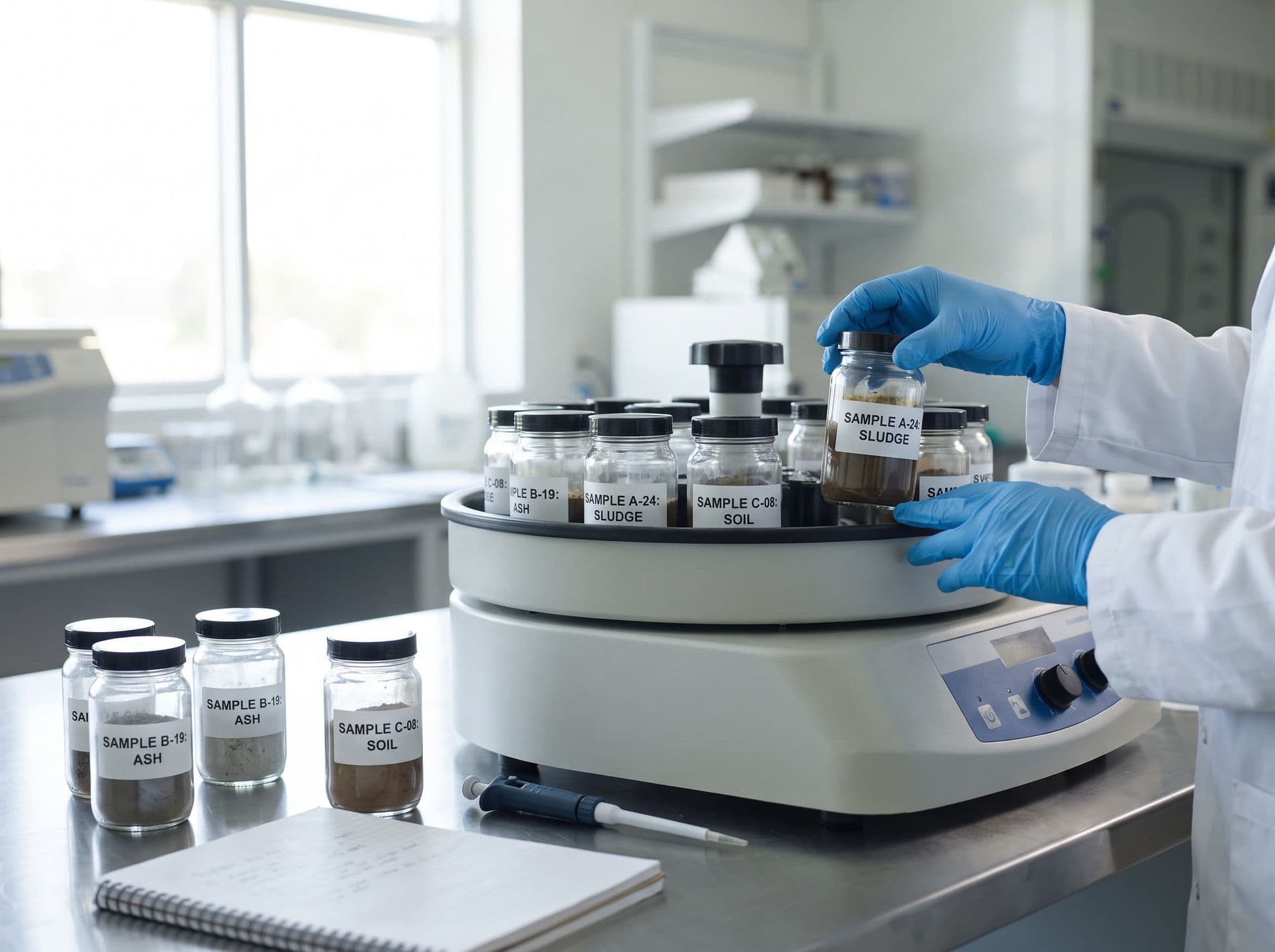
Leachate and solubilized extract in one report, each with its own set of limits
When the generator or the environmental agency asks for the extracts, leaching (ABNT NBR 10005:2004) and solubilization (ABNT NBR 10006:2004) are recorded on the same sample. Each extract is compared with the limits the lab registered for the edition required in the case.
- Each extract compared with its own set of limits
- Reference and edition stated in the record
- Report reviewed and issued in the lab's template
Features mentioned on this page
Each feature is shown with its current status and with what remains the lab's responsibility.
| Topic | Status | What exists today | Limit / laboratory responsibility |
|---|---|---|---|
| Regulations and limits | Depends on configuration | The laboratory registers regulations, matrices and maximum allowed values, and the system compares each result with the limits registered for the service. | Regulations are not preloaded. Registering, checking and updating limits are the laboratory's responsibility. |
| Sampling | Partial | Sampling schedules with calendar and frequency that create work orders automatically, plus field sampling records in the app. | There is no statistical sampling plan, such as ISO 2859 or AQL. The sampling method and plan are defined by the laboratory. |
| Sampling app with offline mode | Available | The app downloads sampling jobs, including PDFs, for work without internet. It records photos, the client's signature, GPS and checklist, and sends them in batches, with retries, when the connection returns. | Offline mode covers the operations confirmed in on-device testing. Validate your sampling flow in airplane mode during implementation. |
| Instrument result import | Via file import | Imports results from CSV, TXT, XLS and XLSX files and from ASTM E1394, HL7 v2, XML, JSON and fixed-width text formats. Files arrive through an agent installed at the laboratory that watches a folder, by manual upload or by webhook. | The system does not connect to the serial port or directly to the instrument. The ready-made import profiles are generic, with no reader specific to a manufacturer or model, and each instrument is configured and tested with the laboratory. |
| Reporting of results | Available | Reports in configurable templates, with comparison against registered limits, marking of accredited tests, partial reports and revisions archived with reason and owner. | Report content, the decision rule and statements of conformity are defined and checked by the laboratory. The uncertainty shown on the report is the value entered, since the system does not calculate it. |
| Data export | Partial | Each module exports its data as XLSX, CSV, PDF or ZIP, such as lists, reports and test reports. | There is no full export of all laboratory data in a single package. Handing over data at the end of the contract is covered in the contract. |
Current features and limits
Regulations and limits
- What exists today
- The laboratory registers regulations, matrices and maximum allowed values, and the system compares each result with the limits registered for the service.
- Limit / laboratory responsibility
- Regulations are not preloaded. Registering, checking and updating limits are the laboratory's responsibility.
Sampling
- What exists today
- Sampling schedules with calendar and frequency that create work orders automatically, plus field sampling records in the app.
- Limit / laboratory responsibility
- There is no statistical sampling plan, such as ISO 2859 or AQL. The sampling method and plan are defined by the laboratory.
Sampling app with offline mode
- What exists today
- The app downloads sampling jobs, including PDFs, for work without internet. It records photos, the client's signature, GPS and checklist, and sends them in batches, with retries, when the connection returns.
- Limit / laboratory responsibility
- Offline mode covers the operations confirmed in on-device testing. Validate your sampling flow in airplane mode during implementation.
Instrument result import
- What exists today
- Imports results from CSV, TXT, XLS and XLSX files and from ASTM E1394, HL7 v2, XML, JSON and fixed-width text formats. Files arrive through an agent installed at the laboratory that watches a folder, by manual upload or by webhook.
- Limit / laboratory responsibility
- The system does not connect to the serial port or directly to the instrument. The ready-made import profiles are generic, with no reader specific to a manufacturer or model, and each instrument is configured and tested with the laboratory.
Reporting of results
- What exists today
- Reports in configurable templates, with comparison against registered limits, marking of accredited tests, partial reports and revisions archived with reason and owner.
- Limit / laboratory responsibility
- Report content, the decision rule and statements of conformity are defined and checked by the laboratory. The uncertainty shown on the report is the value entered, since the system does not calculate it.
Data export
- What exists today
- Each module exports its data as XLSX, CSV, PDF or ZIP, such as lists, reports and test reports.
- Limit / laboratory responsibility
- There is no full export of all laboratory data in a single package. Handing over data at the end of the contract is covered in the contract.
Frequently asked questions
Does Gerencialab ship with the NBR 10004:2024 series and the limits already registered?
No. The lab registers the criteria and limits of the edition required in each case and keeps them up to date. During implementation, our team helps build these records.
Does the system classify the waste?
No. The system compares each parameter with the registered limits and flags what falls outside. The classification, under the edition of the standard that applies to the case, is decided by the technical manager and recorded in the report.
What about reports that still cite classes I, II-A and II-B?
The system has no classification rule of its own and works with the criteria the lab registers. Older licences and contracts may still cite ABNT NBR 10004:2004, superseded by the 2024 series. Check with the environmental agency which edition applies to your client and state the edition in the report.
Can leachate and solubilized extract go in the same report?
Yes. The waste tests can be combined in one report, and each extract is compared with its own set of registered limits.
Does the system send results to the environmental agency?
No. Results can be exported as a spreadsheet or PDF so the team can prepare the report. Submission is done by the lab or by the client.
Does sampling work without internet?
The app downloads the sampling jobs for offline work and sends the data when the connection is back. Offline mode covers the operations confirmed in testing on the device. Validate your sampling workflow in airplane mode during implementation.
Does it import instrument results?
Instrument results come in by file (CSV, TXT, XLS, XLSX, ASTM, HL7, XML, JSON or fixed-width text), through a local agent that watches a folder, by manual upload or by webhook. Each instrument is configured and tested with the laboratory. Continuous serial capture is not available in the current version.
Related pages
- LIMS for samples, analyses, review and reportsHow the lab organizes each sample from intake to report.
- Quality management for laboratoriesQuality control, documents, nonconformities and risks.
- Integrations with instruments and systemsResult import by file, API, webhooks and ERP.
- Environmental laboratoriesWater, effluents, soil and environmental monitoring.
See the waste testing routine with your lab's criteria
Free online demo, about 30 minutes long. Our team adapts the examples to your laboratory's routine.