Equipment with calibration, maintenance and usage control
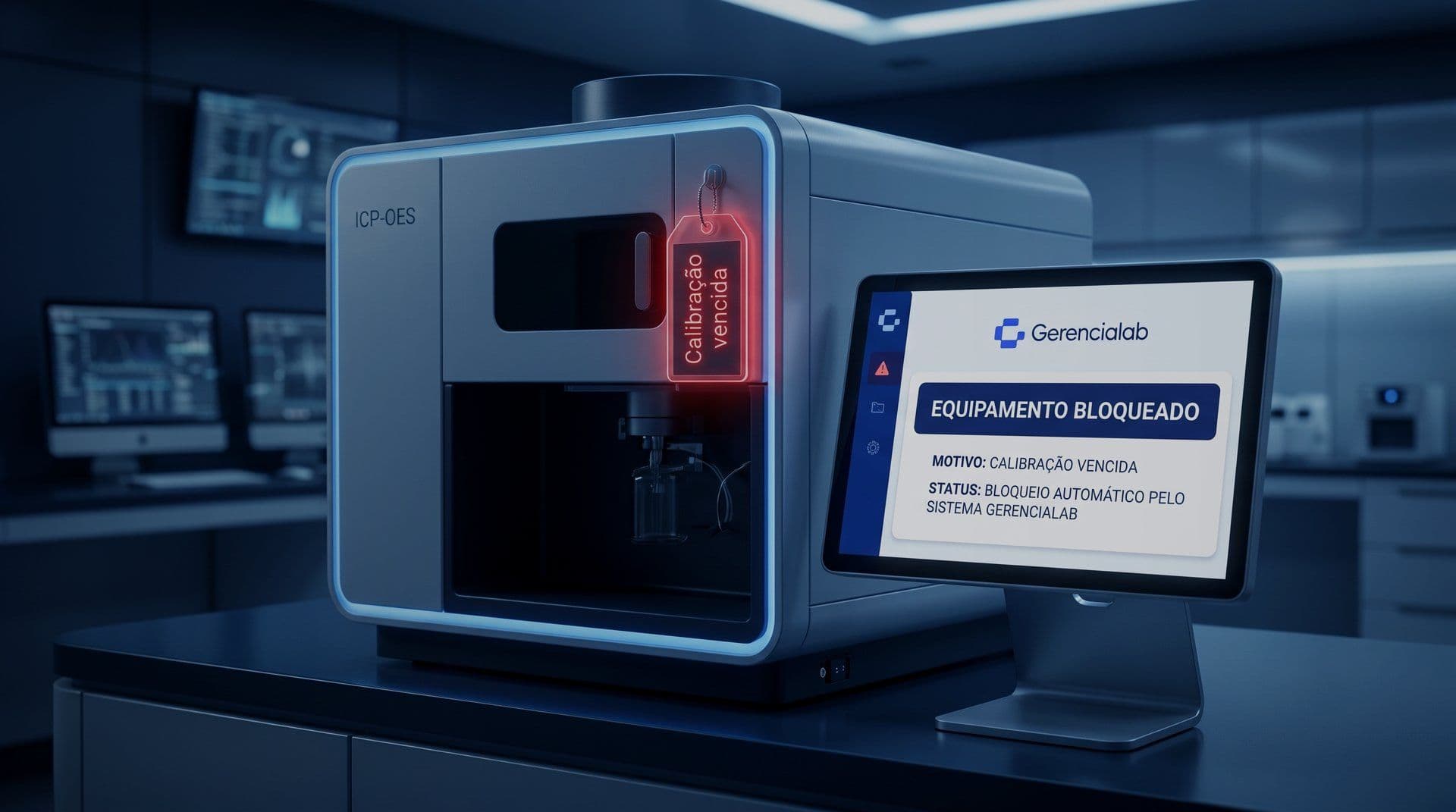
Register equipment with its life cycle, calibration with certificate and uncertainty, and maintenance. The system warns about calibration due dates. Using expired or failed equipment triggers an alert or a block, depending on the setup.
Illustrative system screen. Demo data that does not represent client results.
What you'll find in this area
Equipment states.
In use, in calibration, in maintenance or condemned. The workflow defines each instrument's states and transitions.
Calibration alerts.
Alerts 90, 60 and 30 days ahead and on the due date, with increasing priority.
Alert or block on use.
Using expired or failed equipment triggers an alert or a block. The default is to warn, and blocking applies to critical equipment or when the laboratory turns on blocking mode.
Calibration with certificate.
Date, due date, certificate number, result (approved, approved with restriction or failed), uncertainty and k factor.
Maintenance linked to purchasing.
Preventive and corrective maintenance. External maintenance can create a linked purchase request, for quoting and payment in the Purchasing module.
Recorded condemnation.
Taking equipment out of service is recorded in its history.
Calibration and maintenance workflow
Sample workflow with states, manual transitions and 90, 60, 30 and 0-day alert ranges. The states and transitions are set by the laboratory.
The equipment record
Calibration, maintenance, nonconformities and shipments in the same record.
Calibration and frequency.
Validity, last calibration, frequency and status at the top, with the certificate history right below.
Maintenance.
Preventive and corrective, with plan, frequency and history.
Equipment nonconformities.
Nonconformities linked to the instrument are recorded in its record.
Calibration shipments.
Shipments show the supplier, the shipping date and the expected return.
Frequently asked questions
Does the system prevent the use of equipment with expired calibration?
It depends on the setup. The default is to warn. Blocking applies to equipment flagged as critical or when the laboratory turns on blocking mode.
How does the calibration due-date alert work?
Each instrument has a calibration due date. The system creates alerts 90, 60 and 30 days ahead and on the due date, with increasing priority.
Where is the calibration certificate kept?
In the equipment record, with date, due date, certificate number, result, uncertainty and k factor. The metrological traceability chain is assessed by the laboratory.
When does the equipment become available again?
When the new status is recorded, for example when maintenance is closed or the new calibration is entered.
Want to see the QMS with your laboratory's routine?
Free online demo, about 30 minutes long. Our team adapts the examples to your laboratory's routine.