Reviewed results and traceable records
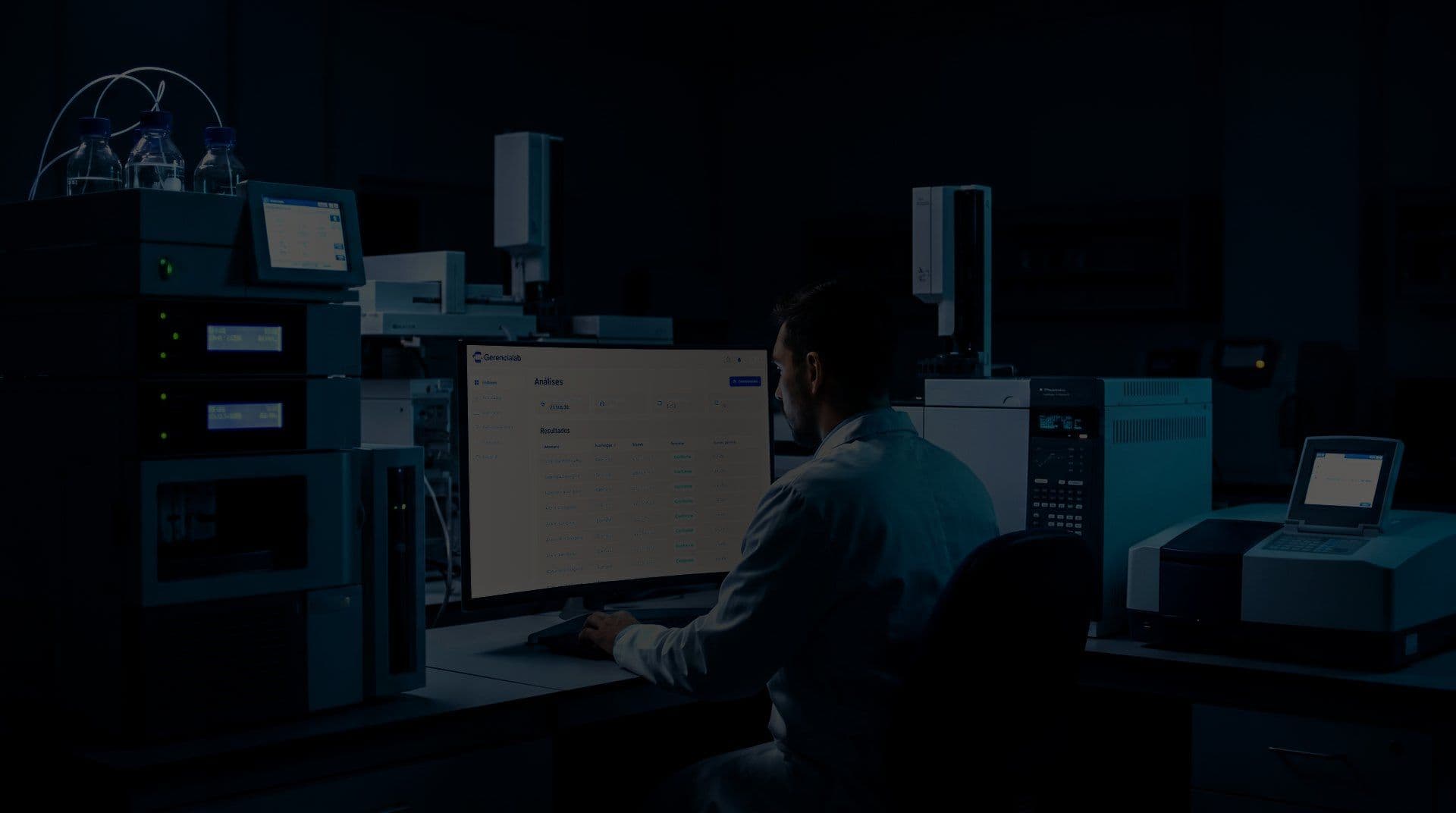
The analyst records the readings and the calculation follows the laboratory's method spreadsheet. Each result is linked to the sample, the analytical batch, the reagents and the equipment used, and moves on to review according to the configured workflow.
Illustrative system screen. Demo data that does not represent client results.
What you'll find in this area
Reading fields defined by the method
The analyst sees the method's reading fields and records what was measured. The calculation uses the method spreadsheet registered by the laboratory.
Calculation by the method spreadsheet
The result comes from the formulas in the method spreadsheet. Validating that spreadsheet for its intended use is the laboratory's responsibility.
Analytical batch
Samples that run in the same batch are grouped, and the batch sheet shows them together on one screen.
Reagent lot recorded
During analysis, the team picks the reagent lot, and the system can suggest a lot by FEFO (first expired, first out). The lot is recorded on the result, with its expiry date.
Instrument results by file
Results exported by the instruments come in by file, in the supported formats, and are linked to the analyses. The current version does not offer direct real-time serial capture.
Equipment recorded on the analysis
The equipment used is recorded. If its calibration has expired, the default is a warning. Blocking applies to critical equipment or when the laboratory turns that mode on.
Versioned methods
Methods have draft and published versions, with a change history. Selecting, verifying and validating methods is up to the laboratory.
Where transcription tends to cause errors
Many result errors happen between the reading and the final number. The system helps reduce these points.
Reading tied to the sample
The reading is recorded on the right sample's form, with no manual copy into another spreadsheet.
Formula applied by the method
The calculation uses the method spreadsheet, the same way in every analysis.
Reagent and equipment recorded
The reagent lot and the equipment used are linked to the result, with expiry date and calibration status.
Frequently asked questions
Does it fit the kind of analysis my laboratory runs?
The system is used by testing and analysis laboratories working with matrices such as water, effluent, soil, food and environmental samples. The method belongs to the laboratory; the system organizes the analysis, quality control and report around it. Confirm your routine during the demo.
Do I have to recreate my methods' formulas in the system?
Not necessarily. The calculation can use the laboratory's method spreadsheet. Validating that spreadsheet for its intended use remains the laboratory's responsibility.
Does the system read results straight from the instrument?
By file, yes: the instrument exports the file and the system imports the results. Continuous serial capture is not available in the current version.
How do I know which reagent was used in each analysis?
The chosen lot is recorded on the result, with its expiry date. The system can also suggest the lot by FEFO.
Want to see this stage with your laboratory's routine?
Free online demo, about 30 minutes long. Our team adapts the examples to your laboratory's routine.