Controls to identify deviations before release
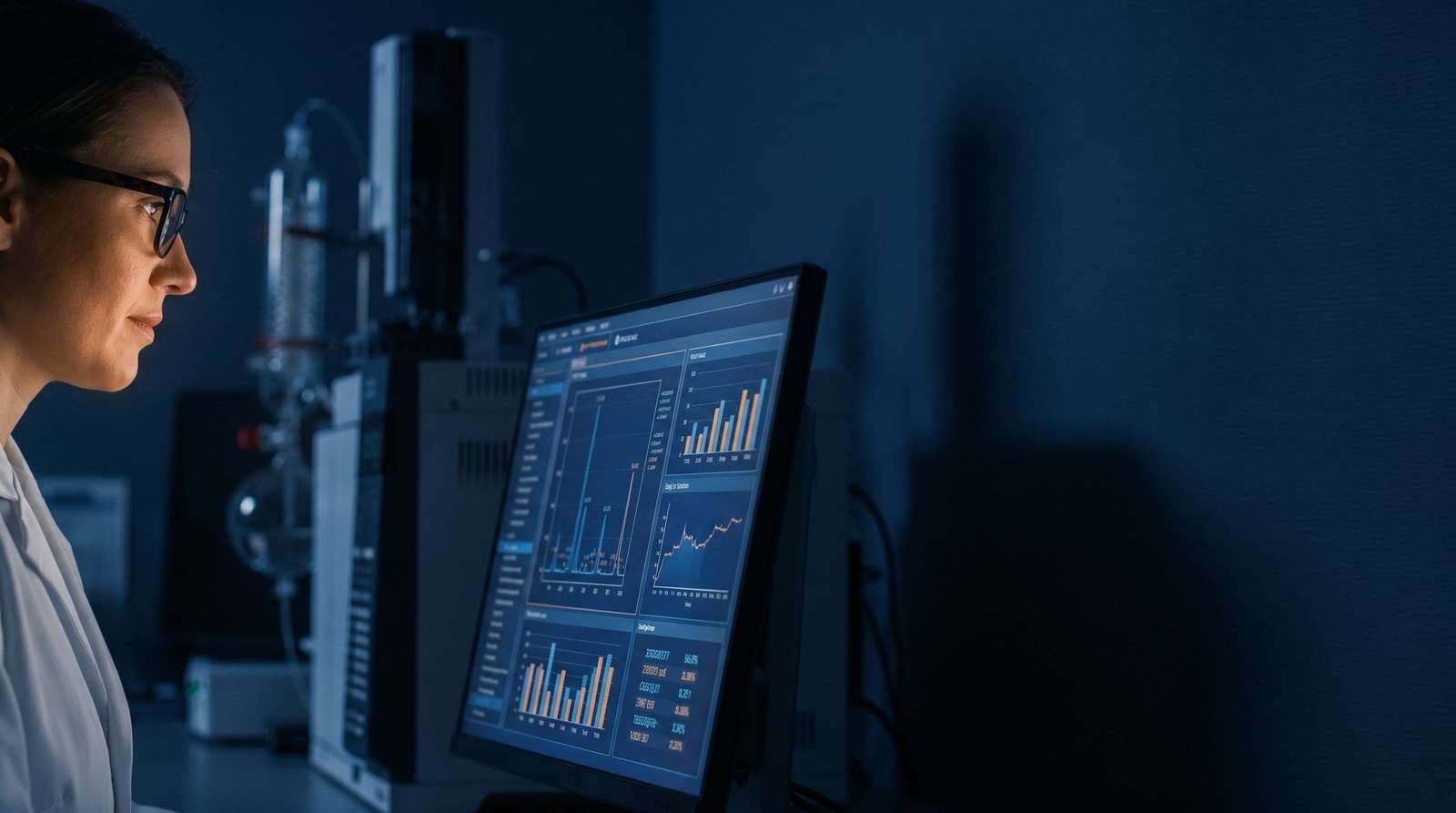
When the control is entered, the system evaluates the run with Westgard rules and builds Levey-Jennings, CUSUM and EWMA charts. The action taken when a rule is violated is configured by the laboratory.
What you'll find in this area
Levey-Jennings chart with the laboratory's data
The mean and standard deviation are calculated from the control results entered. The chart reflects the laboratory's own process.
Westgard rules on every run
Each run is evaluated with 6 rules: 1-2s as a warning, 1-3s, 2-2s, R-4s, 4-1s and 10x. The 7T trend appears on the dashboard.
CUSUM for small, persistent drifts
The CUSUM chart helps spot small deviations that build up over time.
EWMA for trends
The EWMA chart smooths out variation and helps spot trends.
Action configured per rule
For each rule, the laboratory sets the action: warning, flagging the batch as blocked, logging a quality control nonconformity or reanalysis. The decision to release the result belongs to the laboratory.
Reference materials with lot and expiry
Control materials are registered with lot and expiry date, following the laboratory's records.
Analysis start deadline
The analysis start deadline is set per parameter and counted from sampling. The system flags when it has been exceeded.
Evaluation saved with the run
The evaluation result is saved with the run and can be checked in the control history.
Three charts for different kinds of deviation
Each chart helps spot a different kind of problem. The control plan is defined by the laboratory.
Levey-Jennings with Westgard
Helps identify large deviations and rule violations in each run.
CUSUM
Helps identify small, persistent deviations.
EWMA
Helps identify trends, with variation smoothed out.
Frequently asked questions
Which Westgard rules are evaluated?
The system applies 6 rules when evaluating each run (1-2s as a warning, 1-3s, 2-2s, R-4s, 4-1s and 10x) and shows the 7T trend on the dashboard, with Levey-Jennings, CUSUM and EWMA charts. The action taken when a rule is violated is configured by the laboratory: warning, flagging the batch as blocked, logging a quality control nonconformity or reanalysis.
Does the system block release when a rule is violated?
The action is configured by the laboratory for each rule. Flagging the batch as blocked signals the problem, and the decision to release the result belongs to the laboratory.
Does the chart use generic limits or my laboratory's?
The mean and standard deviation are calculated from the controls entered by the laboratory.
Who defines the control plan?
The control plan, acceptance criteria and participation in proficiency testing are defined by the laboratory. The action on failure follows each rule's setup.
Want to see this stage with your laboratory's routine?
Free online demo, about 30 minutes long. Our team adapts the examples to your laboratory's routine.